Category: Marketing Strategy

This is a sample category description, which can be used to boost SEO rankings. Make sure you have enabled this from the Edit Category screen in your dashboard.

  • How to Improve your Email Open Rates in 2021: Nailing the Science

    How to Improve your Email Open Rates in 2021: Nailing the Science

    With all the talk about design, segmentation, analytics etc, most advice on email marketing runs the risk of leaving you blind-sighted to fundamentals. Those that truly get people to want to read your email. Or any marketing artefact for that matter. Those rooted – like all marketing best practices – in human behaviour.

    So, if the question you’re trying is to answer is “how do I get my audience to open my email?”, take a step back. Instead ask, “what does / would my audience want from me?”. Or “from a business like mine?”.

    Here’s a list of some of the things they do – in no necessary order of priority.

    1. Recognize you quickly – without having to put in additional effort
    2. Understand – equally fast – what your value proposition is
    3. Be rewarded for time spent on your content – leave feeling smarter, entertained or trusted

    Your mission, then, is to address these needs. You can leverage the power of email marketing and its tools to do so. How? Exactly what we’re on about in this blog.

    IN THIS BLOG

    1. Why bother about Open Rate, anyway?
    2. Up-to-date Back-end
        a. Qualified Subscriber List
        b. Segmented Subscriber List
        c. Anti-SPAM Approach
        d. Timing & Frequency
    3. Relevant & Efficient Front-end
        a. Optimized Envelope 
        b. Efficient Design & Layout
        c. Quality Content 
    4. In Conclusion

    1. Why bother about Open Rate, anyway?
    Of the many good people who have subscribed to your email updates, only a few will actually open it. Even fewer will open it regularly. Some emails, in fact will bounce and stay undelivered. The percentage of how many of your DELIVERED mails get opened is your Email Open Rate. 

    Open Rate and Click Through Rate (CTR), which is the number of people who click on the link in your email, combine to form the most important metrics used to measure success of an email campaign. Give this read from mailchimp a glance to know more about email marketing metrics and benchmarks. 

    Open rate is a top of the funnel metric. If no one opens your email, other metrics like CTR will definitely suffer. 


    2. Up-to-date Backend
    The backend system of your email marketing campaign is like the foundation of a building. A passer-by doesn’t see it, yet forms a quiet opinion about it. At the most basic, the backend support of your email campaign requires you to work on 4 components – quantity and quality of your subscriber list, navigating through SPAM filters, and the timing and frequency of your email.
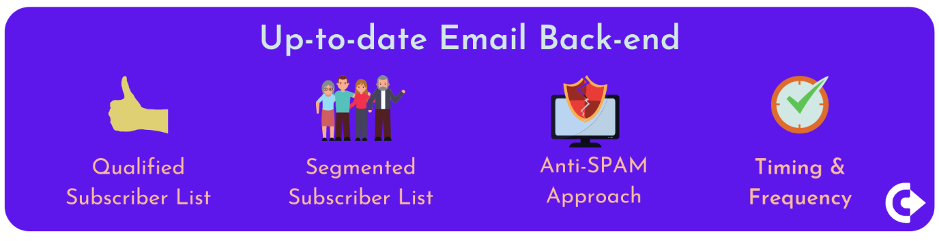
    A strong, up-to-date backend is the secret sauce to directing consistent, relevant, and high value email content to the right consumer at the right time. 


    a. Qualified Subscriber List
    Amongst the first decisions you make about your subscriber list is about how you want them to confirm their interest in your content. Through a single opt-in or a double opt-in. Former is when the user fills a subscription form and gets added to your list. In the latter, you follow up the form with a confirmation link in the email. A link they must click before they’re added to your list. 

    Single opt-in obviously gets you more leads but the double opt-in gets you more qualified ones. Those who shared their interest through your subscription form, and in the interim you sent the confirmation link, did NOT lose that interest.
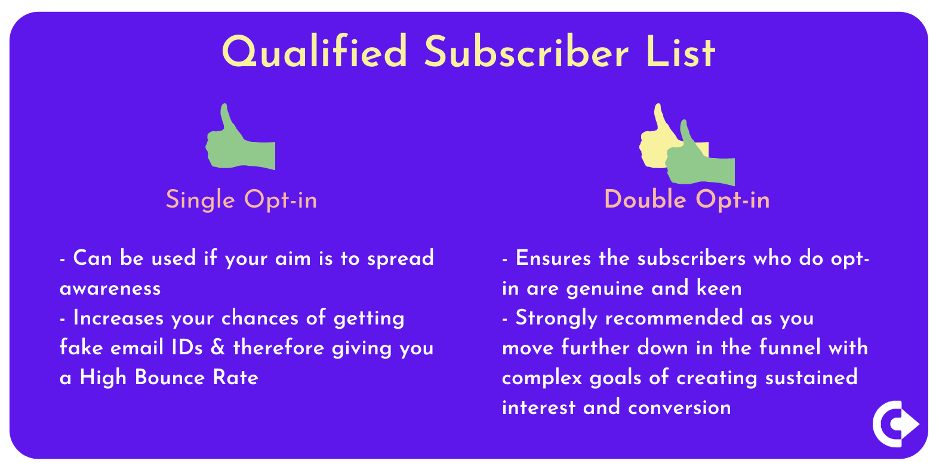
    In the battle of quantity vs quality – choose quality. Successful Digital Marketing is not about numbers. It is about ensuring you or your clients get good return on those numbers.

    No matter how good you are, you will have a few people lose interest in or value from your offerings. It’s a good idea to periodically remove inactive subscribers – those that haven’t shown any engagement for 6-months or more. A few ways to gently nudge your sleeping beauties:

    – Check if they want to update their contact details
    – Take their feedback on what’s working and what’s not – incentivise it. Throw in a goodie – gated content, limited period offer etc
    – Craft that one win-back email campaign/last ditch effort


    b. Segmented Subscriber List
    Fact check – Segmentation of subscriber list means classifying your customer database into smaller groups and adapting contents to their profile, interests, and implied needs. 

    How does it impact your email open rate?
    – Ensures your emails are relevant to the groups you’re writing to. For example, if running a campaign to promote a Life Coaching business, your email marketing content to entrepreneurs should be VERY different from that you send to corporate professionals 

    – Helps prioritize groups that have historically given you a higher ROI – that, my friends, is what Digital Marketing strategy is about

    – Helps send emails in accordance with the funnel stage your subscriber is in 

    How can you segment?
    At the most basic level, you can start with geographic, demographic, and psychographic classification. The foundational exercise of spending a couple of days interacting with your targeted consumers and crafting that buyer persona/s will go a long way in making this quick and dirty.


    c. Anti-SPAM Approach
    For that email to be opened, it needs to move past the SPAM gate keepers. Doing a few basic checks and sticking to some proven best practices are an absolute must. 

    – Ensure your recipients have actually opted-in to receiving your emails; double opt-in safeguards you against SPAM filters

    – Place a tiny section in the email that educates subscribers about how to whitelist your emails, add you to their address book, and if needed – how to opt-out

    – Send emails from a safe IP address that has NEVER been used to send spams 

    – Use verified domains and keep the code clean

    – steer clear of “salesy” language and excessive use of words like rich, wealthy, cash, mortgage, casino, win, act now, click now, limited time, open now etc 

    – avoid too many URLs, ALL CAPS, exclamations!!!!!!!


    d. Timing & Frequency
    The best day and time to trigger emails for a student who is in classes from 9am to 3pm is very different from the one you should choose when targeting a middle-aged working professional. So, what’s the best way of getting the timing right? Get clear about what a day in the life of your buyer persona looks like.  When do they wake up? What do their commute time looks like? How late do they stay up at night? 

    Here’s a fun fact for you – Campaign Monitor in its study revealed that emails sent on Friday saw the highest open rate and its close cousin Saturday was the worst. 

    A question that plagues marketers and small businesses about email marketing is about the right frequency of emailing customers. Too many may make you look like a spammer and too few may disengage. To know what’s best for your campaign, take note of these…

    – Make a schedule to ensure have a steady, consistent and productive campaign

    – Ensure it allows you to send at least one to two emails per week so you don’t run the risk of losing sales opportunities 

    – Unless you have very strong content that is delivering high value, do not send emails every day or alternate day – that too will lead to lower engagement levels

    A simple tweak to test what subject line works or what timing is great for your users could significantly increase your open rate. That’s why A/B diagnostic tool must be a part of your email marketing strategy.


    2. Relevant & Efficient Front-end

    a. Optimized Envelope 
    The most important part of the front-end that gets your subscriber to click on that email is your envelope. A 2019 Litmus study revealed that the 3 components of your email envelope combine to convince your subscriber to open that email and give it a gander. 
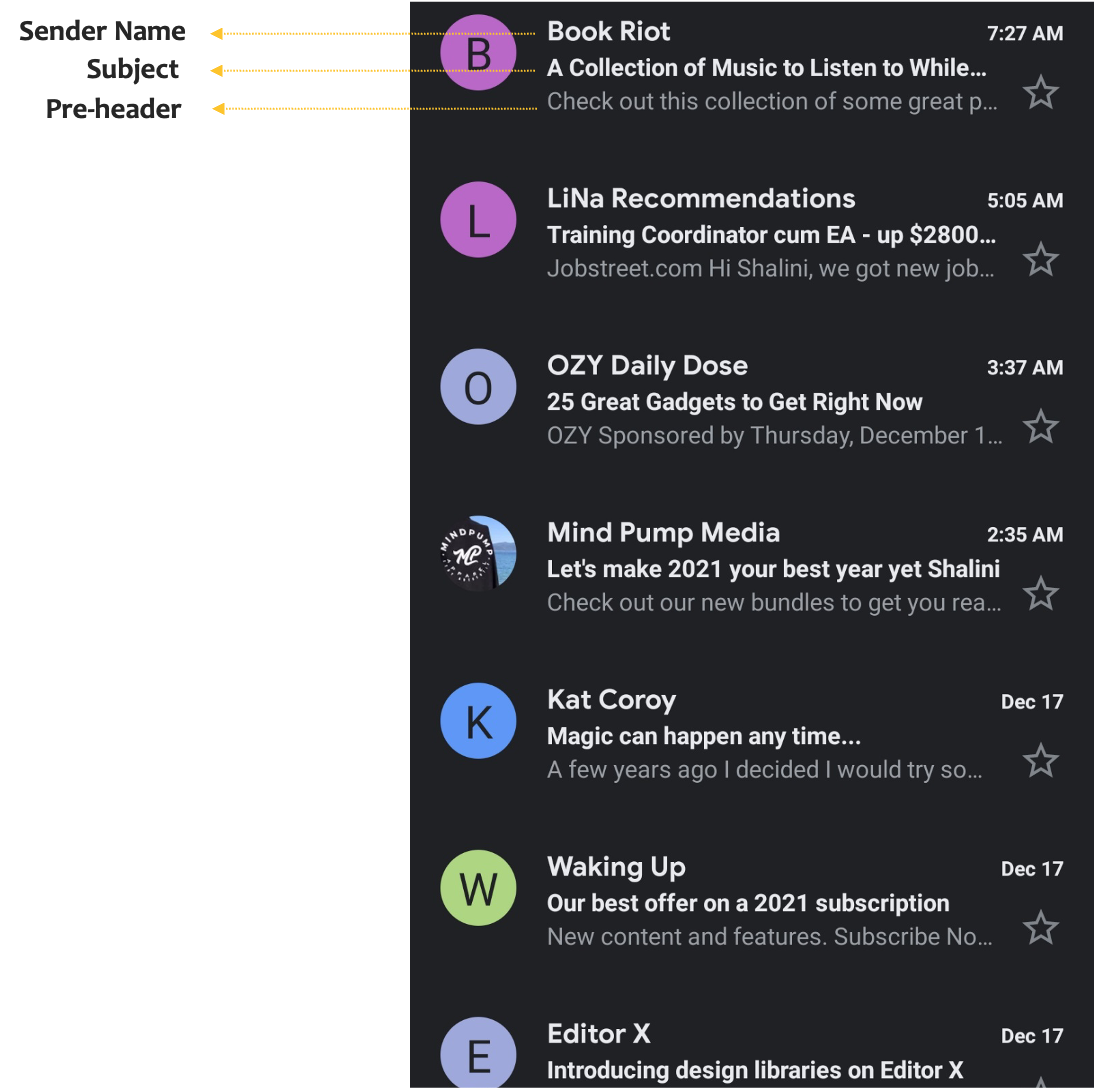
    Read more about optimizing envelope content here. In the meantime, here are a few musts you shouldn’t lose sight of. 

    – Use merge tags to personalize the “To:” field of your campaign
    – Keep your subject lines short but powerful – employ personalization
    – Consider including numbers, whenever you can realistically – they draw attention
    – Don’t build unwanted hype by using deceptive subject lines or spammy pre-header texts
    – Consider including Call the Action in your pre-header
    – Do A/B testing of your shortlisted subject lines & pre headers 

    b. Efficient Design & Layout
    Efficient email design means your readers spend less time in sifting through your email to find what’s relevant to them. 

    A clean, uncluttered layout is crucial in ensuring that the reader feels ready to open the email right now and does not resort to that proverbial “later” part of the day.

    Read more about efficient design here. Meanwhile, follow these basics:

    – Generally speaking – keep your emails short
    – Design keeping your mobile users in mind – vertical, therefore, is preferable
    – Use white space to afford easy understanding and synthesis of information
    – Follow visual hierarchy – large images and fonts carry important information
    – Make your CTA prominent and quick to understand

    c. Quality Content
    Eventually, whether or not your subscribers open your emails regularly is a result of how much value they derive out of your content – each time. What is this effort giving them in return? 

    Do you enrich their lives with tools and tips they could deploy every day? 
    We recommend that at least 50% of the mails you send in a campaign include a clear, easy-to-use tool or tactic. For example in the email campaigns for a Life Coach, we give productivity hacks and performance optimizing tips that readers can implement immediately.

    Do you invest time in creative story-telling, narrative, design techniques that carry an element of interest – leaving them entertained?
    This may sometimes mean beginning with a startling fact or a hard hitting question or just some interesting, funny punch line.

    Do you trust their intelligence? And therefore offer greater, deeper insights into your world? Or does your content move in circles about the same beaten to death idea that they probably lost interest in about 5 years ago?
    While it’s important to repeat information that’s directly relevant to your value proposition, too much repetition is boring, predictable, and ready to be blocked. Weave in novelty through new trains of thoughts. For example campaigns of one of our ecommerce clients that sells hand-made clay artefacts range from informing readers about local artisans and their lives, to specifics about certain deign and its historical relevance, user stories, impact on environment etc.

    When crafting that copy, it helps imagining you’re writing to one person only and not thinking all the thousands you’re aiming to address. In fact sometimes it may also help to imagine yourself and write about what else you would like to read and know. This mental shift allows you to write more personalized subject line and message as well as bring novelty.

    In Conclusion
    First up, invest in healthy email practices so that you never find yourself in that dreadful, old SPAM bucket. Once you’ve crossed over to the inbox, your biggest bet in ensuring the readers open your email in the few second break they’re taking from work is the right envelope content and your reputation. Optimize your envelop by ensuring your Subject and Pre-headers are relevant, powerful, and super easy to understand. 

    The reputation of your email lies in its copy. Good copy adds value to the subscriber. Good copy is why your subscriber will open your mail – again and again. 

    Have you tried any of these practices in your email campaigns? Tell us how that worked out for you. Or let us in on something else you did to improve on this metric.
  • Top 5 Webinar Software Tools – Comparison for 2021

    Top 5 Webinar Software Tools – Comparison for 2021

    Whether you are getting ready to launch your own webinars or you need to find the right tool for your organization on a shoe-string budget – choosing the right webinar software can be daunting. Realities like the growing need for online collaboration, plummeting budgets, and increasing number of options to choose from don’t make it easy.

    Two important facts before you we run through our short list: 

    1. Webinars are here to stay. The ongoing pandemic has really shone the spotlight on this ubiquitous too. Research by Demand Gen Report in collaboration with GoToWebinar – a LogMeIn product, shows that 77% of B2B marketing teams use webinars and 15% plan to assimilate a webinar platform as a vital element of their marketing mix. 

    2. Not all webinar software is created equal.

    Whether you want to host a small meeting with 5-15 people or host a huge online event with up to 100,000 participants, this blog will provide a helpful comparison of the most popular webinar software today. It gives an insight into the tools that matter, features you should pay for and those that you needn’t. 

    IN THIS BLOG

    1. First Considerations
        i. What are the must-have features of a good webinar software tool?
        ii. Do I need multiple presenters and how often?
        iii. How many attendees do I want at a time?
    2. Comparative Analysis – 2021
        a. Demio
        b. Webinar Ninja
        c. Zoom
        d. GoToWebinar
        e. Webex
    3. Comparison – At a glance
    4. Last Thoughts

    First Considerations
    Your choice of the webinar platform has to be driven by your business requirements. Knowing the business situation you’re hoping to solve for through the webinar software will save you time and money. At the outset, therefore, ask the following questions.  

    i. What are the must-have features of a good webinar software tool?
    At a basic level, a webinar software is an audio-visual tool that enables communication amongst dispersed groups. All options currently available in the market will offer you multiple plans each with its own capacity of attendees, hosts, and features. The advanced, complex features you choose possess should primarily depend on the goals  of your webinars. But keeping the basic utility of a webinar software in mind, here are some common denominators you should check for irrespective of your goal.

    1. quality video and audio content – that has a direct impact on how your attendees view your brand

    2. recording and storing (locally or on cloud) – especially if you want to repeat, repackage, sell, and profit from past webinars

    3. reporting – webinars are more than a presentation, They are a business opportunity to brainstorm, sell, and engage. Some degree of reporting webinar activities is a must. To track trends, coverage, and effectiveness with internal and external customers

    4. audience participation – you will need ways to seek inputs from your attendees. Most tools have a variety of simple and advanced interaction tools built-in. You will need some for sure. How many and how complex? The nature of your webinar should determine that 

    5. security – of your data and your attendee’s confidential information has become increasingly important especially in the light of data breach incidents cropping up 

    6. customer service – in the form of live reps, onboarding help, or dedicated account managers to answer questions promptly is a must. You do not want to be stuck in a sticky tech situation with little to no help from your service provider

    Generally speaking – the more technical and academic your subject of webinar, the more advanced your attendee interaction tools should be

    ii. Do I need multiple presenters and how often?
    This is an important consideration because you do not want to overcrowd and clutter your screen. Most webinars allow more that 1-2 hosts in their premium plan – if you don’t anticipate needing more than a few presenters on a week to week basis, you may want to get a more expensive plan.

    iii. How many attendees do I want at a time?
    Consider how many attendees your webinar tool can hold at the highest level. Even if your current number is small, you do not want to host your webinars on a platform that limits your long-term growth. That’s not say that higher is better – the number should be slightly futuristic while being cost effective for today. Changing platforms each time your attendee list increases is cumbersome – for you and your users 

    Comparative Analysis – 2021

    Webinar Software 1 – Demio

    Demio proclaims itself as “a webinar platform built for marketing”. It’s clean and minimalistic user interface allows you to create feature-rich live and automated webinars for training and marketing purposes. 

    Key differentiators:

    1. fast and easy customization with choice of landing pages to insert your logo, colours and presenter bios 

    2. ease of use – copy previous webinar with preferred settings and then use it for later

    3. flexible scheduling a single event and series of recurring events

    4. interactive features like polls, “Featured Actions” or Calls to Action to augment engagement, sharing an existing resource or building a new one on the spot

    5. everything you share appears above the chat area, which helps grab and retain attention; host can choose to alter emphasis on the screen, show/hide polls and CTAs

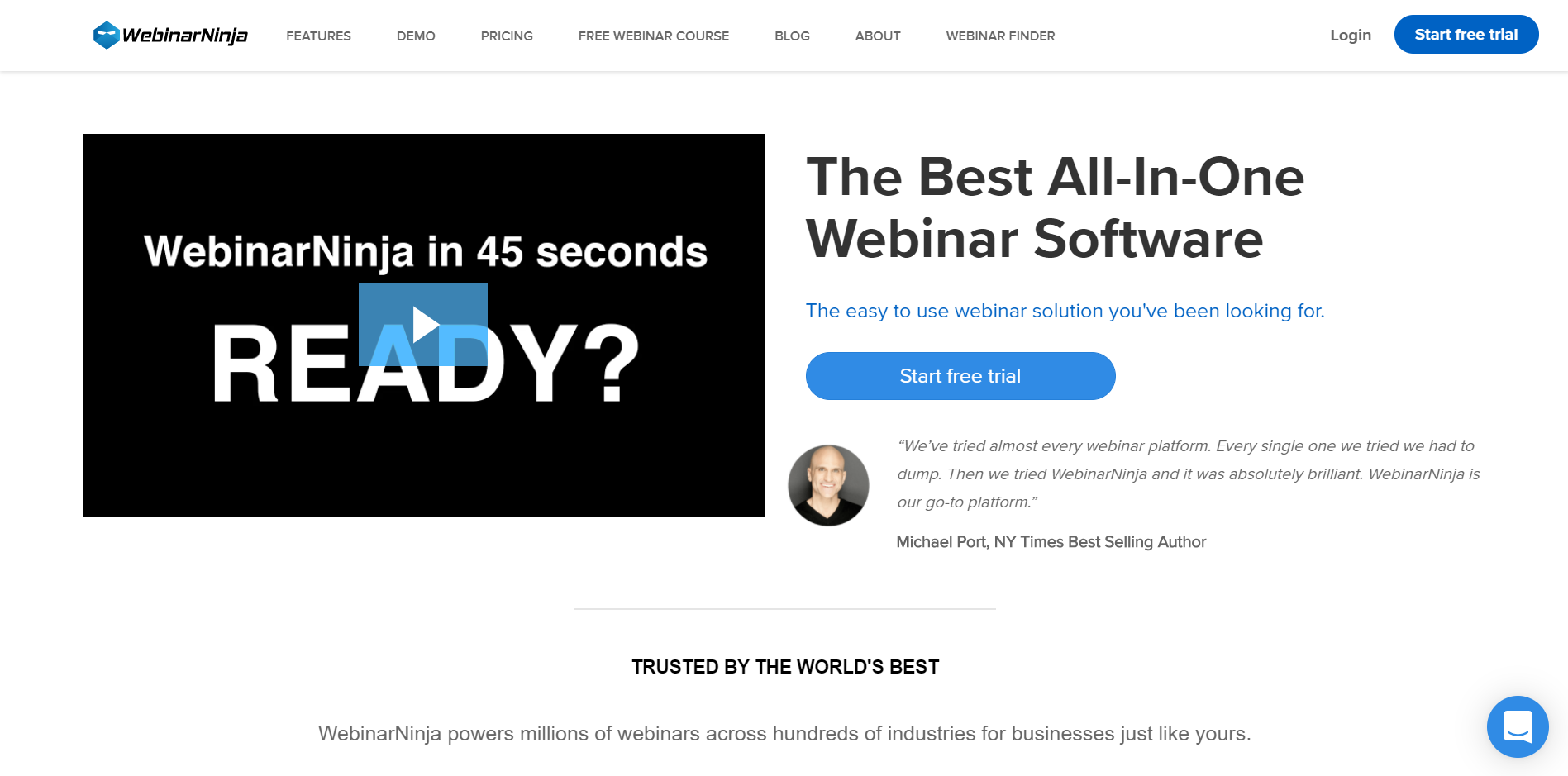
    Webinar Software 2 – WebinarNinja

    Reckoned one of the easiest webinar tools, WebinarNinja gives a choice to create 4 different types of webinars. Live – broadcasted with a live host for audience interaction; automated – recorded / on-demand webinars; series – a group of several webinars; and hybrid – a combination of live and recorded videos.

    Its pleasant, professional and modern interface gives statistics of your past and future webinars including landing page templates, recordings and integrations. Like most tools, it does offer seamless integration with auto responders such as MailChimp and Hubspot as well as other marketing apps via Zapier.

    Key differentiators:

    1. easy to use and customise landing page template

    2. four different templates for registration and thank you pages, which are well designed and totally customisable

    3. different layouts to help the host alternate emphasis between presentation slides and presenter/s 

    4. presentation chat and questions are placed under different tags helping you separate general chatter from questions you need to address

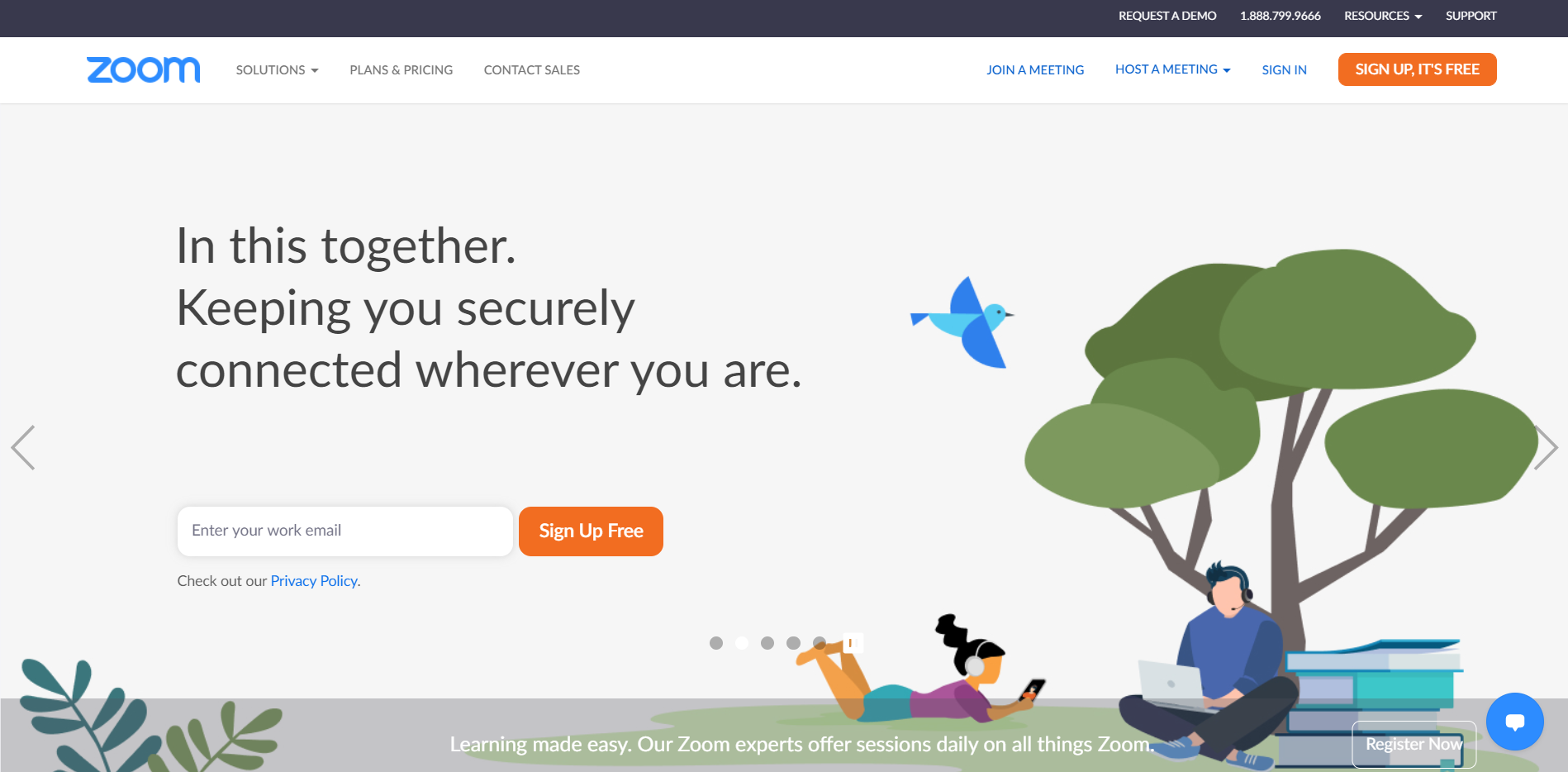
    Webinar Software 3 – ZOOM

    With 2020 unfolding, Zoom literally became a household name overnight. Zoom Video was the largest contributor to the 84.8% increase in the adoption rate of web conferencing tools from January to April 2020. Why Zoom more so than the others? Because of its feature rich free of cost plan coupled with a fool-proof, highly intuitive interface and excellent video quality. This primed a much larger population to pay for its advanced features like longer meeting duration, reporting, custom personal meeting ID, or company branding. 

    Adequately powered for all types of businesses and professionals, Zoom is a great web conferencing tools. That’s perhaps why it is also used for marketing webinars too a great deal. But is that a good idea? Not really. It lacks some of the best marketing and webinar automation features needed for a compelling, engaging marketing pitch.

    Key differentiators:

    1. excellent HD video and audio quality along with screen, desktop, and app sharing options

    2. free sign-up, no one -time fee, free access for 40 min meetings with up to 100 participants

    3. user-friendly and easily navigable dashboard, efficient host controls and virtual whiteboards

    4. private and public chats allowing participants to communicate during the event without causing interruption

    Webinar Software 4 – GOTOWEBINAR

    Even though the oldest webinar tool in the market, GoToWebinar has managed to maintain a formidable presence in spite of a spate of competitors in the last few years. Trusted in the marketplace for its reliable, real-time streaming and marketing features, it continues to be a choice of millions.

    Key differentiators:

    1. integrates with your marketing automation, CRM tools, and more to streamline your workflows and push your webinar data where you need it

    2. features such as flexible scheduling, event management and customisable webinar invitations help create an optimum business environment

    3. while the interface may not be as clean as some of its competitors like WebinarJam, it’s still a very easy to use tool

    Webinar Software 5: WebEx

    Cisco Webex is a web-conferencing tool that provides a suite of video-conferencing products from webinars to meetings. For webinars specifically, its solution called Webex Events (and Webcasting for bigger events) functions with a native app and through phone dial-in.

    Do note Webex is first a video conferencing tool and webinars is one of the many features in its large suite of offerings. So, while its a perfectly fine and trusted solution for basic webinars it does lack some of the more complex features like

    Key differentiators: 

    1. Cisco has a history of network technology successes and its WebEx platform is already regarded as one of the most stable with broadcast quality audio and video

    2. excellent audio-video capabilities

    3. excellent features such as the WebEx Meeting Centre make it easy to organise and conduct online meetings; WebEx Training Centre intuitively loads controls and tools depending on the type of file you upload Live edits possible for attendees who have been assigned privileges by the host, which facilitate brainstorming

    4. if your plan includes the “Call Me” feature (an additional fee), attendees can receive a call directly on their device at the time of the meeting, rather than dial in and use a passcode

    Comparison – At a glance

    Features across all pricing plansPricing Plans with key differentiatorsHighlights
    1. Demio
    – Automatic, no-download, cloud-based webinar events and recordings
    – Email automation and event reminders
    – Unlimited sessions, registrations, & storage
    – 24/7 chat and email support
    – Advanced event set up
    – Interactive tools include private and public, chats, polls, downloadable handouts
    – Excellent waiting room experience
    – Built-in analytics with visually appealing and comprehensive insights
    – Starter – 50-attendee room; 1-host $34/month
    – Growth – 150-attendee room; 1-host; Brand and form field customizations $69/month
    Business – 500 attendee room; 4-hosts with priority support $163/month
    *Annual plans available with 30% discount
    – Easy to use and cost effective for starters

    – Design visually appealing registration pages easily; upload your own slides and presentation material

    – Ideal for marketing webinars with clean, clutter-free design which enable greater attention
    2. WebinarNinja
    – Automatic, no-download, cloud-based webinar events and recordings

    – Email automation and event reminders
    – Unlimited sessions and registrations; recording limit to 2 to 3 hours
    – Interactive tools include private and public chats, polls, downloadable handouts; real-time screen sharing with a choice of layouts
    – Advanced event set up
    – Excellent waiting room experience
    – Built-in analytics with visually appealing and comprehensive insights
    – PRO – 300-live-attendee room; multiple hosts$79/month
    – PLUS – 500-live-attendee room; multiple hosts; hybrid webinars$129/month
    – POWER – live-1000 attendee room; multiple hosts; hybrid webinars$199/month
    – *Annual plans available with 20% discount
    – 24/7, fast high quality chat and email support; live and recorded training and documentation
    – Nuanced features like serate boxes for chat and questions, run multiple polls, and display times offers 

    – Ideal for professionals who need advanced features and need to create short engaging webinars quickly
    3. Zoom
    – Automatic, no-download, cloud-based webinar events and recordings
    – High HD video and audio quality with screen sharing, recording, and whiteboarding options
    – Unlimited sessions; Registration limits starting from 100
    – 24/7 chat and email support; live and recorded training and documentation
    – Interactive tools include private and public
    – Built-in analytics
    FREE: 100-live-attendee room; 1 host; 40-min video / web / group conferencing 
    PRO: 100-live-attendee room; 1-host; 24-hour meeting limit; reporting; user management; cloud recording$14.99/month
    BUSINESS: live-1000 attendee room; recommended if need a minimum of 10 hosts; branding; single sign-on; $19.99/month/host
    ENTERPRISE: live-1000 attendee room; recommended if need a minimum of 50 hosts; unlimited cloud storage$19.99/month/host
    – Real-time screen sharing with a choice of layouts
    – Nuanced features like separate boxes for chat and questions, run multiple polls, and display times offers 
    – Does not have some of the marketing and automation features that do not make it ideal for marketing webinars; plus there are security concerns due to the lack of end-to-end encryption 

    4. GoToWebinar
    – Strong video and audio quality.
    – Simulated live webinars that allow you to have pre-recorded webinars that feel as real as live ones
    – Interactive features – in-built polls & surveys, automatic webinar recordings, and private chat
    – Flexible scheduling to the entire event management process
    – Automated email reminders, customizable webinar invitations, and a highly converting registration page 
    Starter: 100-attendee room; 1-host$89/month
    Pro: 500-attendee room; 1-host; Choice of 3 customizable landing page layouts, Video editing, Video Sharing, Video Embedding, $199/month
    Plus: 1000-attendee room; Choice of 3 customizable landing page layouts in addition to all the features in Pro$429/month
    *Annual plans available with 20% discount; No credit card free 7-day trial availableEnterprise Plan – 5000+ participants. Price available on request
    – Easy to switch between multiple screens, programs, etc
    – Download needed for host and attendees to use GoToWebinar. Alternatively, users may use GoToWebcast – its browser based solution.
    – A bit pricier than it’s competitors
    5. WebEx
    – Full screen HD video with 4 layout options; in-app voice listening; join from any video system; security; save recordings on own system
    – Chat, Notes, Raise Hand, Polling and brainstorming tools like interactive whiteboard, file sharing, screen sharing and selective application sharing
    – Automated calls inviting people to attend the webinar
    – Advanced follow-up analytics and online customer support
    Free: 100-attendees; 1-host; 50-min meetings; No recording; Online customer support$0/month
    Starter: 100-attendees; 1-9 hosts; 24-hour meetings; 5 GB recording; Online, chat + call in customer support; Encrypted cloud recordings$13.50/host/month
    Plus: 100-attendees; 1-50 hosts; 5 GB recording;$17.95/host/month
    Business: 200-attendees; 5-100 hosts; 10 GB recording$26.95/host/month
    Enterprise: Unlimited attendees + hosts + recording;dedicated account manager; toll free dial in$163/month
    *Annual plans available with 10% discount
    – Recommended for product launches, educational and training forums for small groups and one-on-ones
    – Upload files as attachments so attendees can see and download them directly – most other tools will allow users to view but you have to mail if you want people to download
    – Popular marketing tools like SalesForce are easily integrable.

    Last thoughts
    All the webinar software reviewed in this blog are high quality with good functionality. All of them make webinar creation simple and intuitive for the non-techies amongst us.

    Eventually, the webinar platform you finally opt for will be dependent and defined by your business requirements. Are you selling? Then, Demio and WebinarNinja are great options. If your webinar content is informative and/or educational, then you may want to check out Zoom or WebEx or GoToWebinar.

    If you are doing a webinar for the first time, then choose one that offers you a free sign-up or a free trial. Once you have done a couple, you will understand the ropes better. This will help you to choose an effective platform, tailor your presentations, reach out to your audience and provide the right kind of experience.

    • How to Design a Great Marketing Email that drives results in 2021?

      How to Design a Great Marketing Email that drives results in 2021?

      News Alert: Email marketing is not dead. Nearly 306.4 billion emails were sent and received each day in 2020. And it’s likely to increase to 361.6 billion by 2024. Not surprising then, emails continue to be a company’s number one touch point with customers and prospects.

      Exactly in this fact – in the sheer number of emails a consumer receives in a day – lies the criticality to make an email stand out. Good copy is an absolute must. Use of relevant images is expected. What else, then, must you do to get your consumer to pause at your email; hear what you want say; do what you want them to do.

      The answer is in Design.

      Design as Paul Rand says is “method of putting form and content together” such that it communicates the right message – efficiently and effectively. Demanding less time and effort from the subscriber yet making your message sticky.

      While there is a lot said and written about good copy, good design – especially in emails is sadly ignored.

      IN THIS BLOG

      1. Why Design?
      2. Email components that influence design and best practices for 2021
          i. Envelope Content
          ii. Content
          iii. Footer & Signature
      3. Principles of design and their application in emails
          i. A clean and simple layout
          ii. Intuitive design
          iii. Facilitate brand recall
          iv. Effortlessly readable copy
          v. Meaningful graphics and imagery
      4. Top 3 email design must haves in 2021


      Why Design?

      Email subscribers follow a 3-second rule. Which means, within the first 3 seconds of peering at your email, the reader will decide whether or not to invest any more time on it. 

      Let’s look at what’s exactly happening in those 3 seconds. Their eyes fall on the body of the email. Visuals coupled with a few words they glance through send an instant message to their analysing brain. In that limited time, the brain tries to do 3 things.

      1. validate relevance to their needs 
      2. validate authenticity
      3. make sense of the message

      Good email design, then, works with the clear goal to:

      – address EACH of these cognitive needs QUICKLY
      – ensure that readers decide in favour of spending more time on your objet d’art

      Because when they do spend more time, they read your perfect copy, understand your unique value proposition, and respond to your CTA. Eventually, then, whether or not they act in favour of your CTA is a matter a free will! There’s comfort in knowing that they are taking an informed decision – thanks to your email design. 

      The goal of every email marketing campaign is to make this journey of 3 seconds to 3 minutes (or more) effortless and value-adding for the subscriber. Good design ensures you’re at the driving seat and steer your reader’s attention to the right place, at the right time.


      Email components that influence design and their standard best practices

      Each component of your email, its content and design, and flawless coding combine to form a complete email experience for your customer. It’s important you give each of them your attention such that it communicates something that’s right about your brand. Your out of the box thinking. Your eye for detail. Or your fun work culture.

      i. Envelop content
      It’s the envelop content that answers the first 2 questions in your reader’s mind. “Is the message relevant to me?” and “Is the brand legit, professional and expert in its field?”. A 2019 Litmus study revealed that the 3 components of your email envelope combine to convince your subscriber to open that email and give it a gander. 

      Good design begins at optimizing the envelop content.

      a) Sender Name text conveys trust and answers the question, “is this email genuine?”. Some tips:

      – You can keep it simple by using the company name – common but easy to identify with; or include a person’s name. But you MUST ensure that the sender name displays a real name – company’s or employee’s – not an email address.

      Including a person’s name is a good idea if that person has an updated and a strong social media presence.

      – Use segmentations for different types of emails. For example.  “Orders at Company” for transactional emails; “John from Company” for newsletter; and “Sale at Company” for special offers.  Just ensure you stay consistent to help your subscribers categorize them. Consider playing around with the options below. But, we repeat, stay consistent.

      b) Subject should be attention grabbing, informative, and short. Your readers will spend less than a second here. If they don’t understand or care about what you’re saying, your email will tumble to the TRASH can. 

      Considering the character limits set by email providers and mobile audience, try to limit the subject line to 50 characters or less to avoid it from being truncated.

      c) Pre-header text is the summary text immediately after the subject line and is used by email clients to prime readers about the main content. It’s a rather popular trend as many email clients like Gmail, Outlook, and the iOS mail app allow you to show snippet or preview text. 

      To truly leverage this feature, consider these practices.

      – include a pre-header text. Leaving it out may mean you allow email clients to clutter it with unrequired content compromising your screen space

      – don’t simply repeat the subject line, write relevant text

      – limit text up to 85-100 characters

      – craft them such that they stand out and pique reader interest – for example add a short summary at the very top of the email design

      – make the subject line and pre-header work together. For example, by using the question-answer technique. Subject line in question format and answer in the pre-header. Or vice versa

      – adding the Call to Action can work in your favour too if used well

      – personalize, wherever possible

      ii. Content 
      In all likelihood, you are paying ample attention to this one. In case you’re tempted to give it a short shrift, do remind yourself that your consumers view emails as a more personal tool than social media. A good marketing email, therefore, carries content that talks directly to your consumer’s needs and in a language s/he knows. This deep connect demands personalization of content. 

      Using subscriber name is a good start. A HubSpot report shows that emails including the first name of the recipient in the subject line have far higher clickthrough rates than those using subject lines without the recipient’s name.

      Segmenting subscribers, that is dividing your subscriber list into different groups based on common characteristics is another easy and effective strategy to bring in personalization. For instance, you might classify groups on the basis of their demographics, or age group, or interests they’ve shown on other platforms. 

      Emails with personalized subject lines turn out to be opened 26% more often and segmented campaigns lead to an increase in revenue by 760%. – Campaign Monitor 

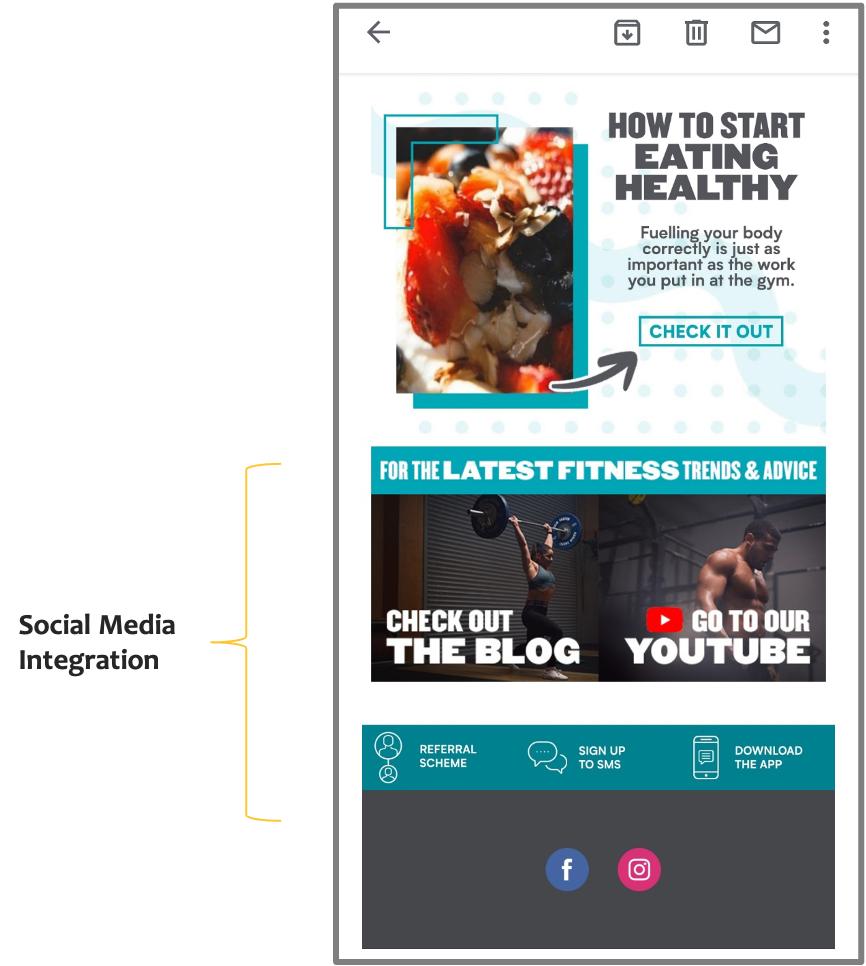
      Another content best practice you must stick to in 2021 is to ensure that your email design enables social media integration. Provide links to your company’s social media assets in the email. It is one of the easiest ways to integrate your social media marketing with your email campaigns. Even though it seems obvious, make it a standard practice to insert social icons on your unsubscribe page; “thanks for signing up” page; recurring email newsletters; auto-responders and official mail signatures.

      iii. Footer & Signature
      Your signature is not the place to express your sentiments on the environment nor your most favourite inspiring quote. Basic ground rules here include:

      – avoiding images in signatures – subscribers may have trouble adding images
      – sticking to text and maybe links
      – keeping them consistent with other signatures in the company, standard format, fields, and fonts. 

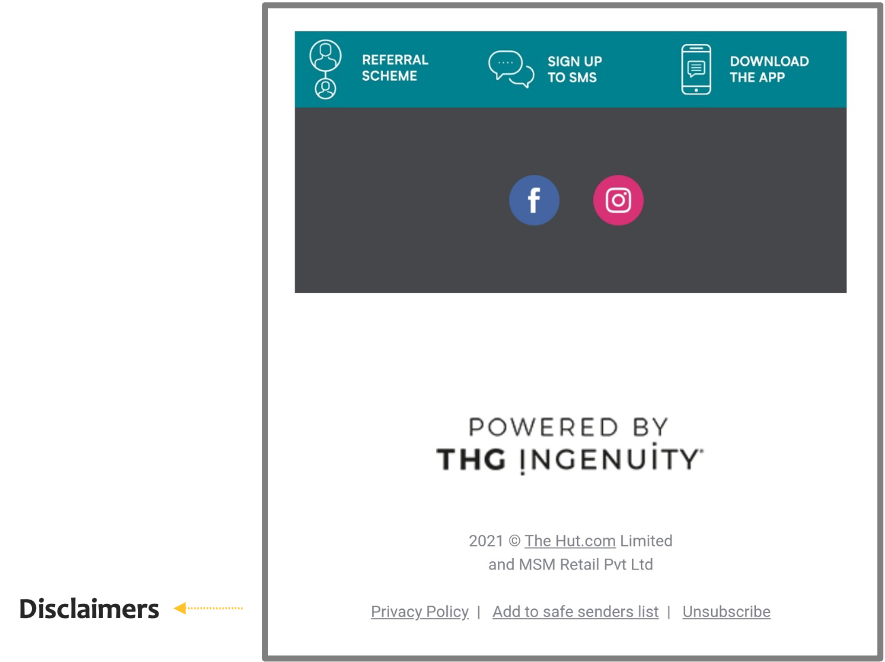
      In the footer, include your organization’s contact details, links to main segments of the website, key services or products, and social sharing or “forward to a friend” buttons. Another significant addition to the footer is a, “Why are you receiving this email?” and the unsubscribe button. This will reduce chances of your emails going to spam folders. 

      The introduction of block functionality by email clients like Gmail empowers subscribers to “block” a sender. Too many blocks can be detrimental to your sender reputation. 


      Principles of Design  and their application in emails

      Remember the third activity your reader’s brain is pacing to complete in 3 seconds? It’s trying to make sense of your email. Hence – keep it simple and quick to understand. Put your emails through a 3 second glance test.

      Once ready – show your email to a few people for 3-5 seconds and then ask them what the email is basically about. If their answer is vague and all over the place, you’ve got some decluttering to do.

      Adhering to basic design principles in your email will ensure you pass that glance test. The list below outlines the principles and best practices you can follow as you deploy them in your email.

      i. A clean and simple layout
      – Ideal email width is 500 to 650 pixels
      – Vertical layout is preferred over a horizontal one – use horizontal separators (visible or invisible) to create clean lines between sections
      – Design with white space
      – A navigation bar is good if you have multiple products or categories to display
      – It’s advisable to limit yourself to four or five sections for better visual emphasis – even if you’re offering retail solutions
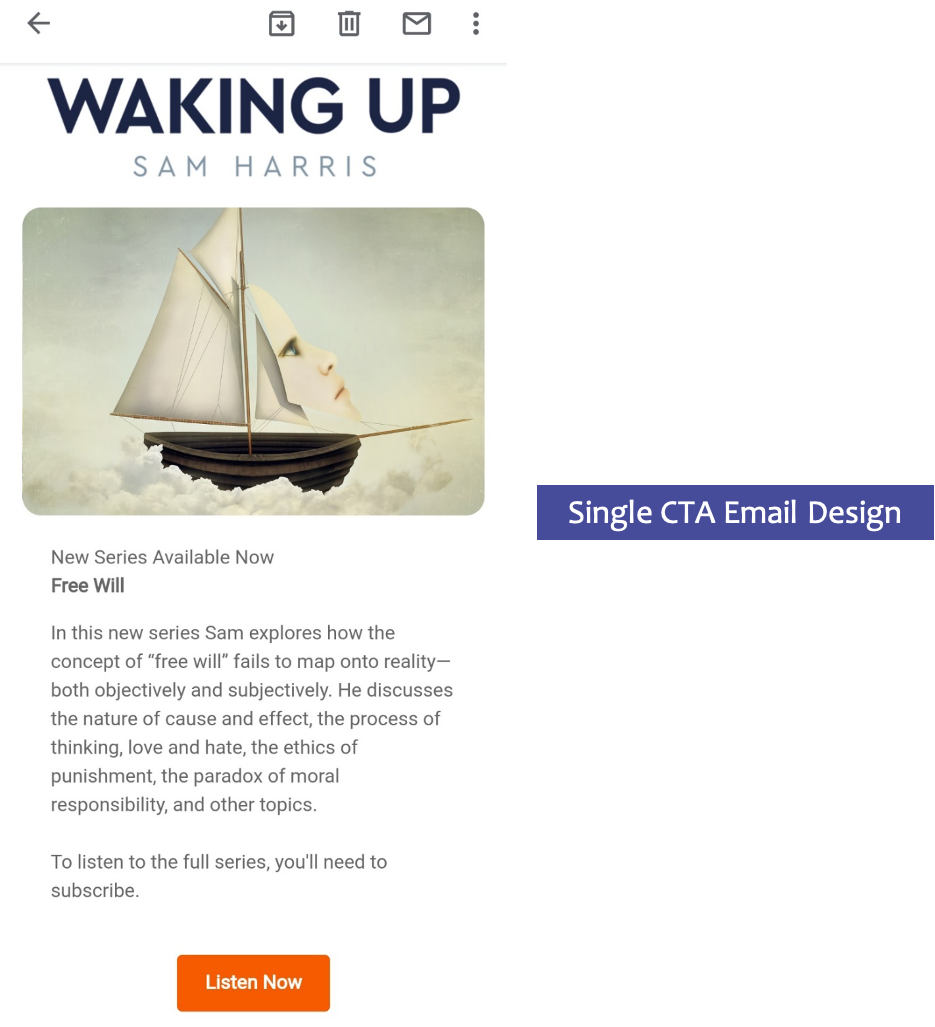
      – It’s a good idea to stick to a layout that draws focus on one thing ONLY and offers ONE call to action only. Your reader’s brain can’t really process more than that while reading your email and eating their sandwich.  Research backs our advice as emails with single CTA showed increase in clicks by 371%

      ii. Intuitive design
      Good design is intuitive.  This means it is grounded on natural human tendencies to view, understand and synthesize information. Tools of visual hierarchy use make comprehension easier. And every single aspect of design like placement, size, colour, contrast, fonts play a role in establishing visual hierarchy in your reader’s mind. More on this…

      – We naturally consider large, conspicuous items as more important. Hence, big fonts and larger images carry important information.

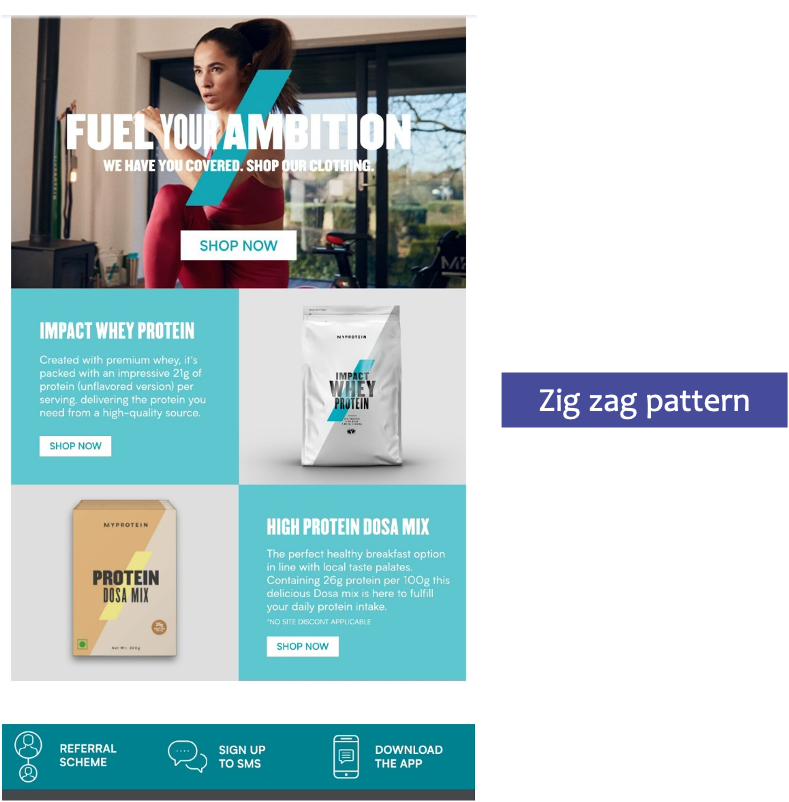
      – Natural eye movement is top to bottom and left to right – structure information such that important information is higher up on the page. Using patterns like zig zag (or Z) and inverted pyramid help mimic the eye movement in your email design. 

      – After navigating through your mail, your reader is naturally left with the question, “what can I do about this?”. Answer this promptly by ensuring your design guides the reader towards the CTA.

      – Use the CRAP principles of designing for better visual emphasis and to aid quick understanding

      iii. Facilitate brand recall
      – Use brand colours and fonts in every single campaign
      – Create a template – consistency in layouts and visuals communicates trust and reliability 
      – Don’t repeat every single part of the layout – that would communicate laziness; fuse creativity with your branding guidelines

      “Not enough talk about the importance of brand in email. Customers don’t sign up for email — they sign up for your brand.” — Bob Frady, CEO HazardHub

      iv. Effortlessly Readable Copy
      – Use short sentences and paragraphs
      – Use spacing and dividing lines to separate content sections
      – Add line breaks every 60 characters even in your plain text emails
      – Use bullets
      – Use web-safe fonts like Arial, Arial Black, Arial Narrow, Comic Sans, Courier New, Georgia, Impact, Tahoma, Times New Roman, and Verdana 
      – Safe font sizes are 14 pixels or more for body of the email and 22 pixels or more for title
      – Plan email content based on inverted pyramid

      Ensure your copy is succinct. Edit, re-edit, and some more. If you don’t edit, your reader will. Not your ideal CTA!

      v. Meaningful Graphics and Imagery
      – Experiment with text only emails or text-based graphics, in interest of simplicity
      – Use visuals like icons, infographics or short embedded videos
      – Provide fallback colour and alt-text for the image
      – Avoid background images layered behind text. Many email clients (such as Outlook) do not support background images
      – Do not squish or stretch images to resize images
      – For fluid emails, scale images up to 599 pixels
      – Make feature headers or product offers easily clickable in the email template 
      – GIFs are a good way to add an element of interest to your email


      Top 3 Email Design Must Haves in 2021

       i. Embrace hyper-personalization
      In a world where hyper-personalization is the order of the day, personalization in email is more than using your subscriber’s first name. Sometimes, it may mean displaying the credit balance or points earned to nudge them to shop more. And sometimes it may mean using AI, fetching data from other platforms to customize your campaign to the exact behaviours and patterns of your subscriber. Let’s say by setting up an abandoned cart series to snag that potential customer who’s probably forgotten to click ‘PAY’. 

      Naked Wine – online wine community and e-commerce store – relies on customer reviews to personalize wine tasting and buying experience. Customer rating on wines they’ve consumed or recommended; feedback and transaction data is combined to personalize email campaigns. Outcome – improved email engagement and campaign conversion rate by 40%. 

      The ability to send hyper-personalized, dynamic content based on user’s interests and behaviour is a trend that’s here to rule in 2021 and is likely going to around for a long time to come. 

      ii. Interaction = Engagement
      Luckily, email marketing makes directing interactive content to a consumer’s inbox rather simple and low cost. Basic skills at embedding HTML and CSS using an email editor is enough to get you started.

      Instead of sending a subscriber to your landing page right away, provide interactive content within the body of the email. This could mean including one or more of the following.

      – Built-in Surveys and questionnaires
      – Offers
      – Animated buttons and call-to-actions
      – Hamburger menus 
      – Product carousels
      – Rollover effects on products and offerings
      – User-generated interactive content
      – Accordion features
      – Add-to-cart 

      More interactive also enables you to integrate other channels into your digital marketing. For instance, if you share a video in an email, you might use social media share buttons to encourage others to share the video content on their own social media pages. The more integrated you can make your marketing campaigns, the more touchpoints you’ll create within your target market.

      iii. Leverage user-generated content (UGC)
      Adding UGC is a definite and proven trend that’s been adopted well and successfully in Email Marketing. Adding created by existing customers help show products/service in real settings and bump up brand credibility. Testimonials and reviews are a good place to start. You can also put together a small, fun contest around consumers sharing their images and videos. Place a small prize or a discount to encourage participation. Select the good quality ones, seek permission from your consumers, and voila! You’re ready to add it to your email. 

      In terms of design, it’ll help if you give your users some simple and clear guidelines to their content aligns with your design practices. For example: 

      – Share a photo or video drinking BeanThere coffee while working! 

      – Click a close-up photo or shoot a video of your hand the next time you’re wearing one of the TITAN RAGA watches.

      – Run-of-the-Mile Shoes and Hiking. It’s a match made in heaven! Click a photo with you wearing one of our collections on your favourite hiking trail and share it with us.


      In Conclusion
      You, me, and our competitors. The good ones and those we don’t consider a worthy match. There’s one question we’re all trying to answer. What’s that one trick in our digital marketing hat that will get our consumer to stay with our content a little longer?

      At CTC digital, we believe the answer lies in that harmony between good content and thoughtful design. This has enabled us to meet targets, build long-lasting relationships, and convert more people into paying customers and brand advocates. Start by giving design a serious thought and bring some of these easy to implement best practices in your emails. Pronto! 

    • Creating & Using Digital Marketing Funnels – Fundamentals

      Creating & Using Digital Marketing Funnels – Fundamentals

      Unless you woke up today with a dream to kick start your Marketing career and landed on this article, you’ve heard of the ubiquitous Marketing Funnel somewhere. That said, most of us do know a handful about the What and the Why of a Marketing Funnel but struggle to figure out the How. How to mould it to the nouveau digital marketing platforms and users, how to leverage it to measure their marketing ROI, or how to gain from it without getting sucked into analysis paralysis mode. 

      Some of these are exactly what we walk you through in this read. 

      IN THIS BLOG

      1. A quick refresher on WHAT
      2.Introduction to the New and Improved 21c. Digital Marketing Funnel
      3. The big WHYs of using Digital Marketing Funnels
      4.The best ways of using them – simply and effectively
      5. The Funnel in action – case study

      A quick refresher on WHAT
      Prima facie, a Marketing Funnel is a visual tool that helps understand the process of turning leads into customers. It is based on the premise that people do not buy immediately – for several reasons – price only being one of them. In effect, you don’t start selling the moment you set eyes on someone who looks like a potential customer. Much like in romance, there’s need for building trust and credibility, and displaying competence. Definitely until you earn yourself the right to ask for customer’s money, and even after that – if you want their continued business. 


      This tiny, agile tool has been the go-to model for marketing and sales professionals across industries & eras since 1890s. No, that’s not a typo. The Funnel is really amongst the longest living business models that continues to kick ass even in the world of Facebook and Email marketing.  

      Fun Fact – The origin of the Marketing Funnel is traced back to Elias St. Elmo Lewis. No. Frank Hutchinson Dukesmith. No. Lewis. Er… Don’t know that for sure. To put the curious cat in you to ease, give this a read. 

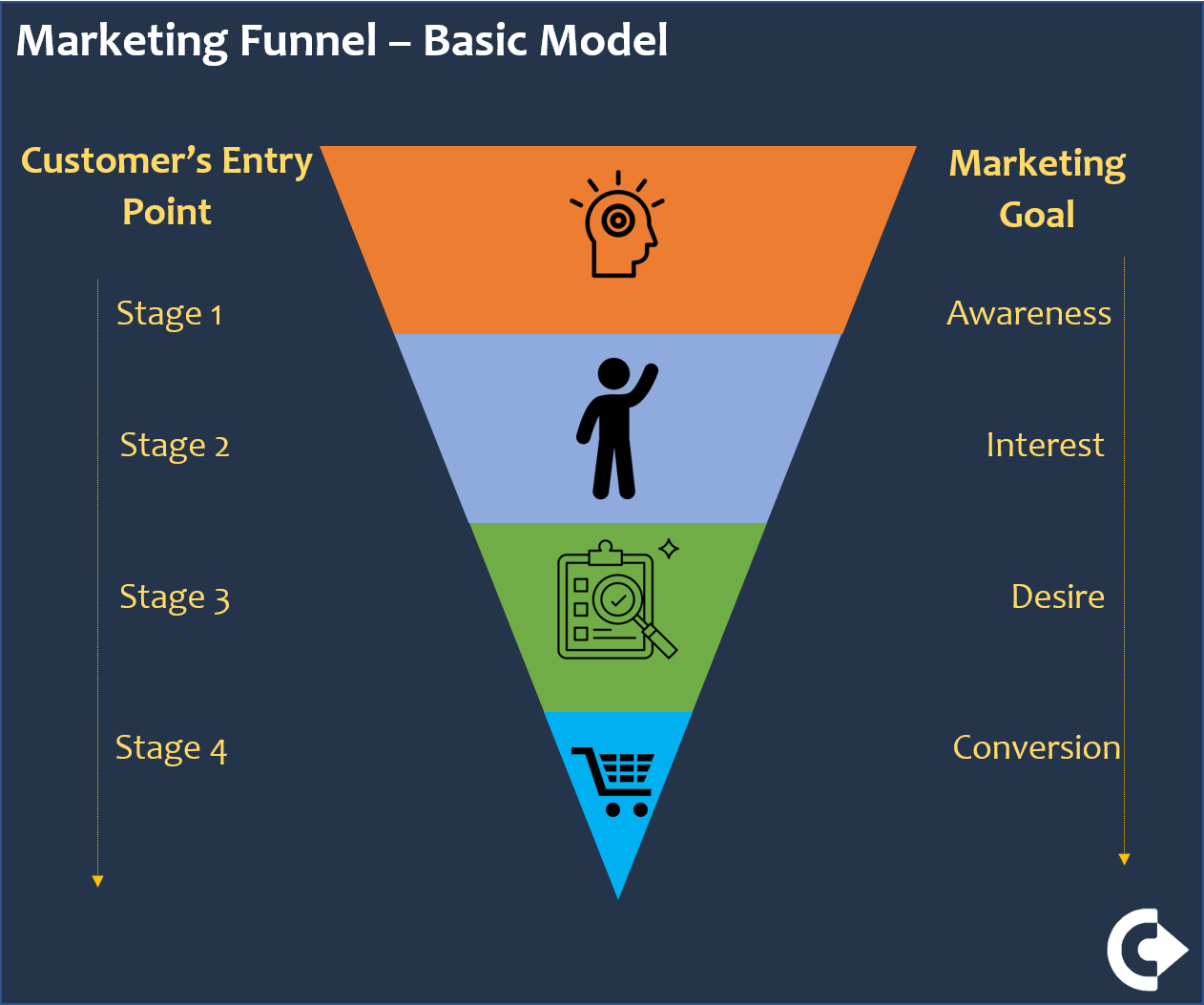
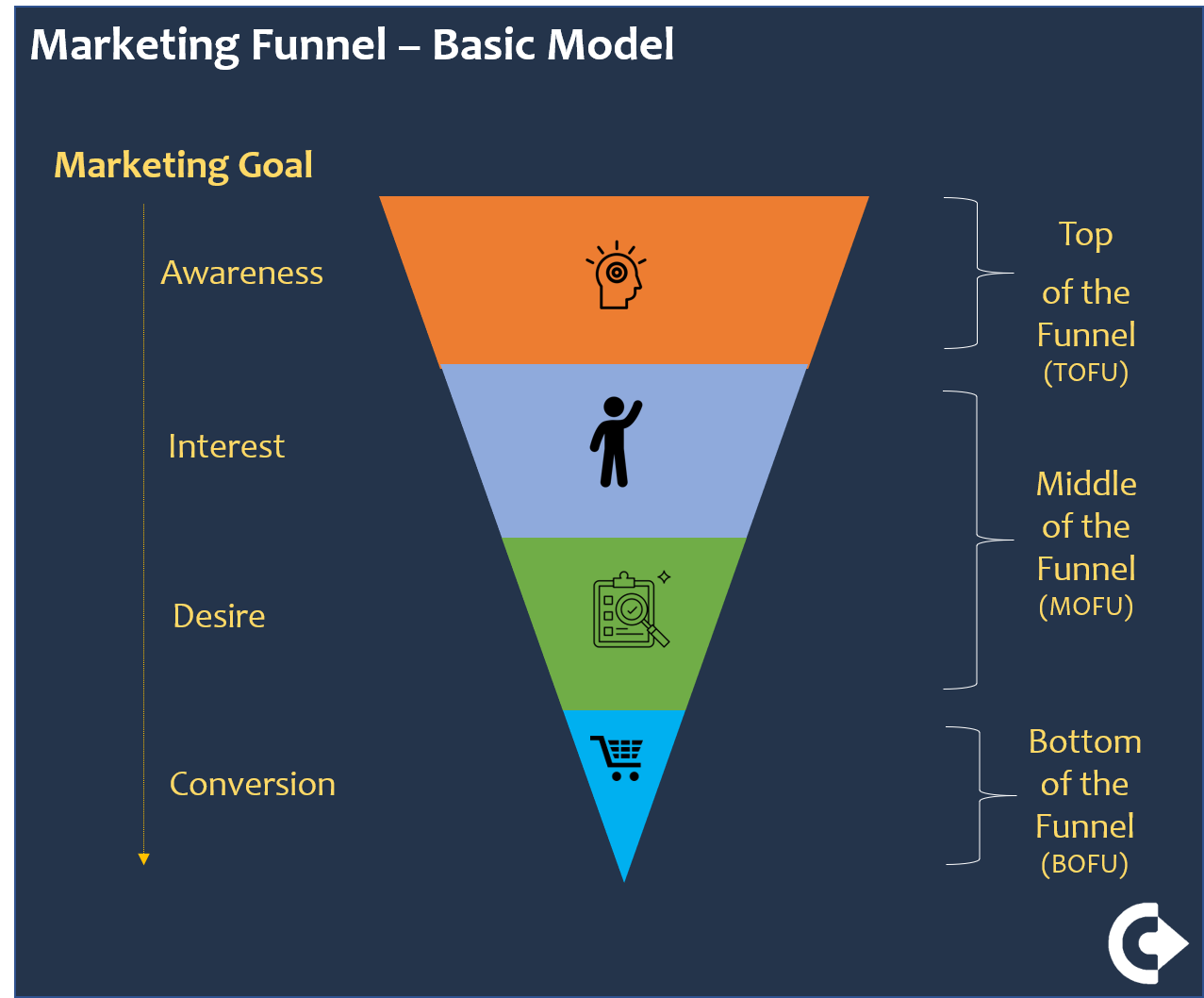
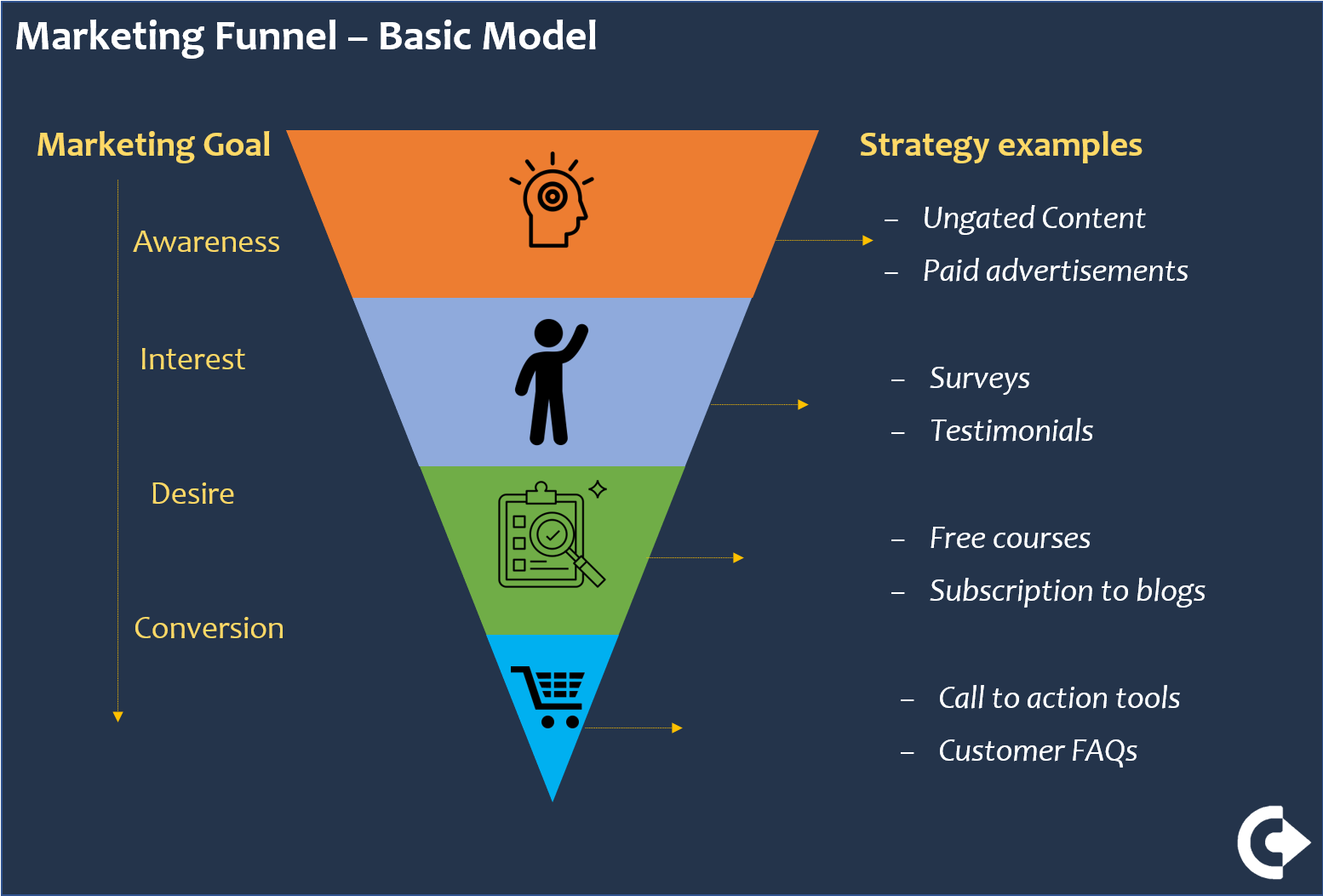
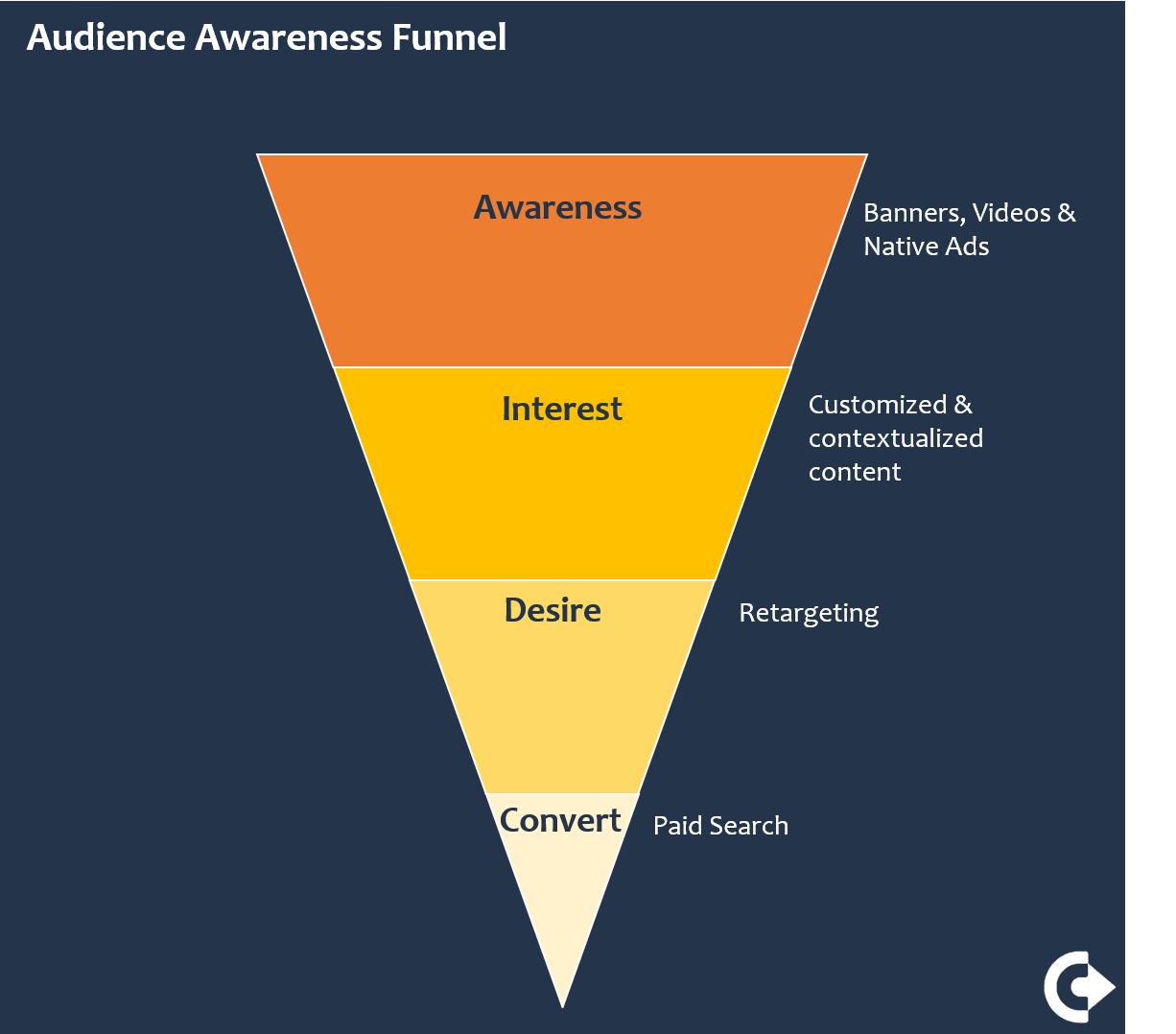
      What we do know for sure is that the acronym AIDC – Awareness, Interest, Desire, and Convert – eventually evolved into its visual avatar now known as the Marketing Funnel. No. Wait. The Sales Funnel. Or is it the Purchase Funnel. Nope, they haven’t agreed on that one either. 

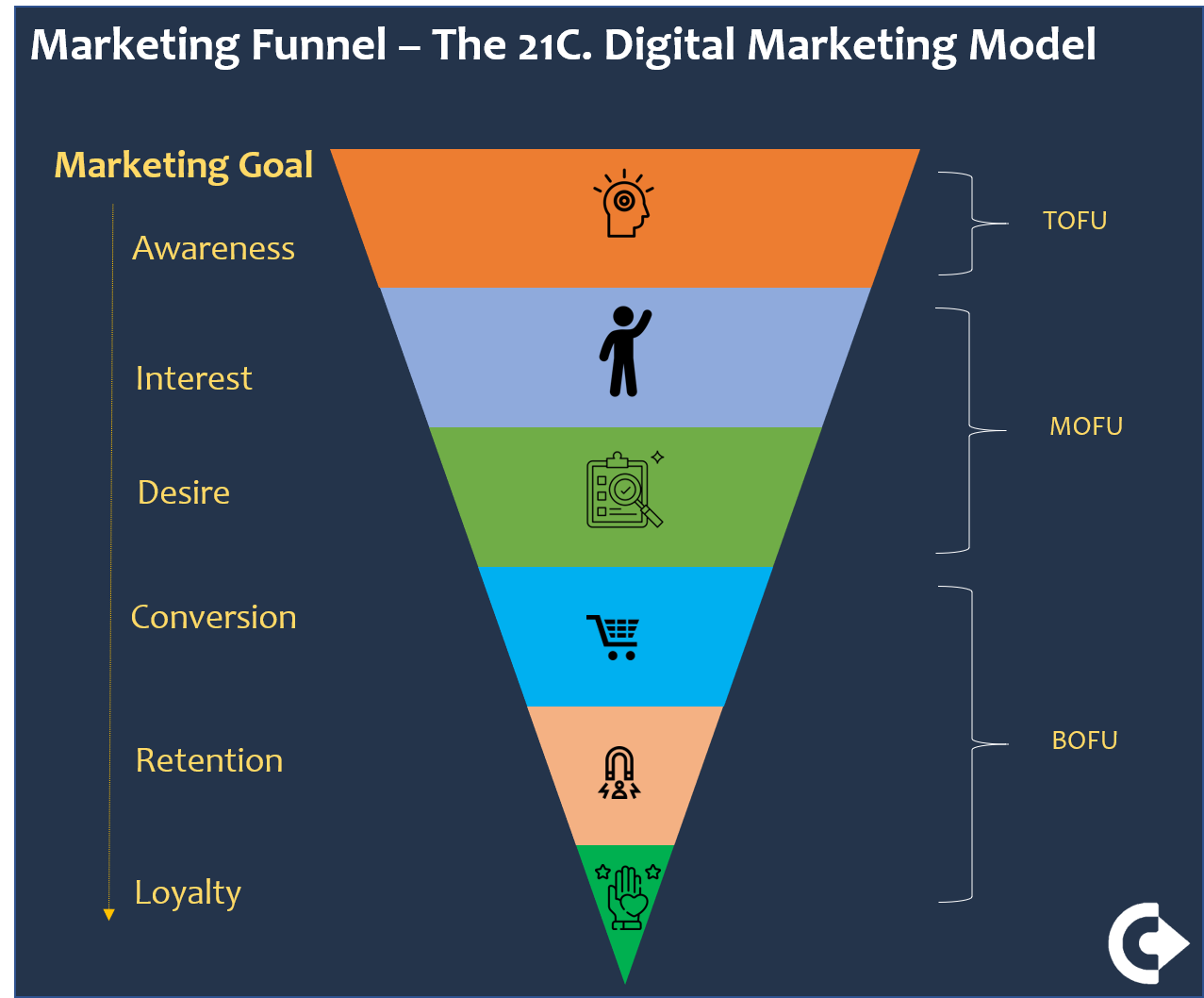
      Along the way, the Funnel has been subjected to much customization. There are variations to what the stages may be called or the sub-stages it may be divided into. Across industries, they differ in length, layers, and in use of tactics. There is, however, consensus on the fact that marketing strategies need to differ as your potential customer moves from being at the top of the funnel, to being in the middle and at the bottom. In fact, this consensus contributed to the widely accepted terminology of Tofu-Mofu-Bofu. 

      1. Top of the Funnel – is where your journey to market a brand begins. Here, your marketing efforts focus on building awareness of your brand amongst the new, unaware or as they are commonly called “cold” users. You identify your buyer persona’s explicit and implicit needs and build high quality, original content to establish your brand’s competence in addressing them. 

      2. Middle of the Funnel – Now, your prospects know about your brand. You begin to reach out to these “warm” users with a more detailed account of the brand and its offerings. Your marketing efforts seek to nurture them with value-adding and credibility-building content. In the process, you collect information from your interested leads and qualify them for the sales pitch

      3. Bottom of the Funnel – Having figured out that there is a problem which your brand can address, the lead is now ready to consider your brand worthy of his/her money. Your marketing and sales teams now collaborate on enabling the buyer to make that purchase.


      New, Improved, and Agile 21c Digital Marketing Funnel 
      The new-age Digital Marketing Funnel shares the DNA of its predecessor in structure and functionality. As you build your digital marketing strategy to promote your next brand on the internet, use this funnel as a roadmap. Align your content to each funnel stage and in effect to the readiness level of your prospects and leads. 

      This ensures you don’t shoot from the hip hoping that something from your many digital marketing toolkit will get your buyer’s attention. You don’t take every step in the digital marketing rule book at the same time nor do you resort to that one tool you and your firm are good at. Flaws that many new digital marketing teams are plagued with. 

      Instead, you strategize. You allow the funnel to tell you the platforms your user is most likely to reach at different stages. You allow it to guide you to the content they’re most likely to understand or get drawn with. 

      A complete 21c. Digital Marketing Funnel is a step up from its predecessor on 2 counts:

      1. it extends the funnel by taking within its scope the after-sale engagement. Hence, it requires you to strategize how to retain customers and build brand loyalty. Given that a company loses up to $1.6 trillion a year when customers leave them, this has only become more critical in the post Corona world

      2. since there are finite digital platforms, the funnel allows you to design a tight mapping of strategies and content to each stage – this contributes to greater accuracy and higher ROI while leaving scope for creativity in content strategy


      6-stages of a Digital Marketing Funnel 

      1. Awareness: Your leads come in the garb of viewers, visitors or fans and begin to get familiar with your brand. You aim to strike that right first impression by thoughtful combination of educational and viral content. And no matter what channel you choose, this content should be ungated so it can be distributed and shared freely with no need for a signup.

      2. Interest: Fuelled by relevant content, the lead now starts to engage with your brand online – investigates your solutions, consumes more content, is willing to part with important information to get hold of your content. You aim to heighten curiosity and interest about the brand.  

      3. Desire: Leads that reach here are your Marketing Qualified Leads. Basis the information you have collected from them, you are now equipped to nurture them with personalized content that propels them to consider your offering as a viable solution. Your aim is to make it easy for them to evaluate your offering against that of your competitor. 

      4. Convert – The step where your leads become customers. Your aim is to enable them to take the decision in your favour and commit to your offering – smoothly and swiftly.

      5. Retention – Your marketing efforts now aim to turn one-time buyers into repeat; one-time subscribers into continuous ones. Through well-engineered onboarding, help and assistance gateways, your content focuses on keeping your customers. Hopefully, for a long time to come.

      6. Loyalty: The ultimate destination, this stage is set for your most loyal customers. Through a combination of incentives, contests, user-generated content, you aim to deepen your relationship with them and take their permission to leverage them as your brand ambassadors.


      The Big WHYs of using Digital Marketing Funnel
      The Marketing Funnel has really stood the test of time. Today, as we shift our marketing journey to the digital terrain, the funnel continues to punctuate it with structure, guidelines, and goals for each milestone. Of the many reasons why it is a must in your Digital Marketing tool kit, here are the top 3.

      1. It provides you a framework with which to analyse how well your customer conversion process is performing. These inputs, across campaigns, will give you a keen insight and necessary foundation on which to build your marketing strategy. 

      2. This helps drive a thoughtful content strategy. Armed with a clear rationale and objective to connect with your audience, you ensure your messages stand out amongst the cacophony of content in our lives. For example, as your lead progresses towards the loyalty stage, you’d begin to notice one-to-one channels like emails and specific customer-offers draw more attention than testimonials or campaigns that boast of your expertise.

      3. As a measurement tool, the funnel provides a window to monitor every step of your marketing process. It helps determine how well your ads, social media posts, blogs, landing pages, offers, emails, and instant messages are performing. 


      The best ways of using funnels – simply and effectively

      1. Align it with your persona
      As you onboard a new client and devise your personas, build a practical, user-friendly marketing funnel right at the outset. Ask yourself the following questions to ensure you take into account key dynamics of your buyer persona.

      1. How will the personas find the brand at each stage?

      2. What kind of information do we need to provide to move them from one stage to the next?

      3. How will we know if they have converted or moved to the next stage?

      2. Project Manage the funnel
      There will be a lot that will happen simultaneously the moment you start working through the funnel. And if your funnel is doing its job, it’ll all be happening very fast. Content, lead management, traffic management, remarketing. In fact, all these linear paths will need to move at the same time because of interdependencies. To ensure you don’t drop the ball at any stage, Project Manage your funnel well.

      Download this free resource that can function as your cheat sheet to truly leverage the Digital Marketing Funnel in your next campaign.

        3. Customise it to client industry and business model
        One of the biggest reasons why the funnel has stood the test of time is that you can customize it. From one digital campaign to another, one business model to another, your funnel will and should change. For example the funnel for a subscription based B2C firm like a health and wellbeing app, should be short – connecting leads to freemium or paid account creation landing page, and intensifying post-purchase engagement so that users keep coming back. Prospects of a high-ticket training or education product, on the contrary, should be able to explore a lot of ungated content at the Top of the Funnel. 

        Your goal as a marketer is to make that funnel as cylindrical as possible, guiding maximum potential customers towards conversion.

        In practice, the funnel really allows you to play around with tactics at each stage. Fuelled with the right strategy and creativity, it can enable you to deliver the best conversion results in the form of increased email response rates or opt-in rates, higher frequency and value of repeat purchases, improved click-through rates for ads and social shares, better customer purchase rates and number of loyalists.

        The Funnel in Action – Case Study
        Let’s deepen our understanding through this case study of the funnel our team built and executed for a cosmetics company. 

        Client:
        A new Indian cosmetic brand specializing in skin care products designed by dermatologists. 

        Their USP/s:
        1. Cosmetics curated by expertise of 3 generations of dermatologists

        2. Especially crafted for Indian Skin

        3. 99.9% organic ingredients

        4. Vegan

        5. No animal testing

        The Strategy:
        Step 1: A few engaging dialogues with the client and a deep dive into their industry had us walking out with 2 clear goals.

        1. Increase sales from digital marketing campaigns

        2. Build brand awareness 

        Step 2: We set out, then, to design our buyer persona and paint an accurate picture of what our target audience may want. Focusing, amongst others, on the questions here… 

        1. What skin concerns do they have?

        2. What solutions do they currently have?

        3. What solutions do they seek?

        4. How many of these solutions do we offer?

        5. Where will we find our target customers? (To lead us to preferred platforms / channels) 

        6. What are the best means to communicate our solutions to them? (To fuel content strategy)

        Step 3: What followed were a series of iterations, discussions, & split testing. Its findings came together in the final version of our campaign funnel that looked like this. 

        StrategyContentPlatformsCall To Action
        Awareness   
        Position brand as the ONLY

        – Dermatologically crafted
        – chemical free brand in Indian market  
        Mix of high quality educational and promotional videos /images drawing attention to:

        – skin problems that the brand addresses
        – dermatological, chemical free solutions the brand offers  
        Instagram & Facebook Stories;
        Feed Ads;
        YouTube Ads  
        “Learn More” & “Know More” buttons

        Website and Page visitor tracking through Facebook pixel codes and Google Tag manager  
        Interest   
        Identify “interested” prospects and give them more insight into the brand and its solutions

        – Prospects who had visited the website and/or watched more than 75% of the branding videos selected as the target group.  
        High quality product composition videos

        Eg. – One video highlighted the key ingredients in the Under Eye cream and another one highlighting the texture of the daily use sunscreen to draw attention to its clean ingredients  
        Instagram & Facebook Stories;
        News Feed Ads;
        YouTube Ads  
        Learn More
        Know More
        Find Out  
        Desire   
        Reinforce and deepen the connection with the prospect  Teach them the “life skill” of taking care of their skin at home through:

        – subscription to ‘Skin Care’ blog
        – ‘How To’ videos by dermatologists on board on common skin care questions
        – ‘Customised Skin Care Routine’ – We created a Skin-care routine finder on the website where visitors who entered their email IDs and filled in a short survey, got a DIY skin care routine customised to them

        Guide them on their journey to choose the right productions and solutions for skin care through:
        – high value gated content like downloadable checklists on what their products should and should not have and PDFs on specific skin care routines  
        Retargeting Instagram & Facebook Feed Ads;
        YouTube Ads  
        Subscribe
        Download Now
        Know More
        Find Out
        Watch Now  
        Conversion   
        Retargeting them using data gathered by pixels and the client website

        Dynamic Ads and Promo codes were built in to trigger conversion  
        Targetted content marketing through showcaseing products most relevant to their specific skin concern or skin type

        – Emails retargeting series
        – 15% discount in first time buyer ads
        – Combo Offers  
        Instagram & Facebook Feed Ads;
        YouTube Ads;
        Google Ads (search based);
        Emails  
        Buy Now  
        Retention   
        Retain customers by increasing 2-way engagement;

        Offer solutions/deals/value to build repeatability  
        Special offers, Important Day and Festival promotions for existing customers

        – 25% Discount on next purchase 
        – Seeking Customer feedback
        – CRM with customer data established
        – Reward Point based loyalty program initiated  
        Facebook;
        Instagram;
        Emails;
        SMS  
        Special Offers;
        Holiday Offers;
        Write a Review  
        Loyalty   
        Encourage customers to keep coming back; build brand loyalty  Deepen brand loyalty through relationship building initiatives

        – Birthday and
        Anniversary discounts
        – Loyalty program on website
        – Customer feedback – 15% discount on sharing feedback  
        Facebook;
        Instagram;
        Emails;
        SMS  
        Write a Review;
        Redeem Rewards  

        In Summary
        As the funnels have evolved to suit the online world, they have become increasingly complex too. But there is no doubt that they offer a roadmap that assures your prospects, convert. You have to establish the basic funnel as a part of your campaign scope if you want it to work. Without it, you will find it difficult to take a grip of all the marketing and sales activities, let alone ensure high conversion. 

        It’ll be worth your time to master this model and use it to monitor, direct, and optimize your marketing efforts. As is the case with any tool, with consistent and intentional practice, you’ll reach a stage where it begins to serve its true purpose – effortlessly.

      • Developing Buyer Personas: Find and Reach your Target Customers the proven way

        Developing Buyer Personas: Find and Reach your Target Customers the proven way

        In this blog, we give you a no-BS, straight up, clear shot of this phenomenal marketing tool called the Buyer Persona. By the time you’re done with this read, you will be ready to roll the red carpets for your perfect, tailor-made buyer personas that can literally shine a Master Shifu kinda of wisdom on your sales and marketing strategies.

        IN THIS BLOG

        1. WHAT is a buyer persona?
        2. WHY should I bother with one?
        3. HOW do I create them?
        4. HOW do I use them?

        WHAT is a buyer persona?
        Alan Cooper, the father of “Visual Basic” introduced the term Buyer Persona in his famous 1999 book “The inmates are running the asylum”. He introduced them as a practical, interaction design tool. Today, they have evolved into a strategic component of sales & marketing planning across industries. 

        Buyer persona is a detailed, written down, semi-fictional description of your target consumer group/s. It lists everything – from demographics to interests and hobbies; family size and income to their professional journey.

        It’s not like a CV though. Peppered simply with facts and figures or even characteristics. It’s more personal – deeper – if you please. Like YOUR account of a dear friend – her motivators and fears, her deepest desires and nightmares.


        WHY should I bother with one?
        Creating a buyer persona is time-consuming and can get overwhelming. You’re working with a whole lot of information and you may not intuitively know how to synthesize it. But… it’ll be worth it. In more ways than one.

        First up – buyer personas help eliminate or at least reduce your days of sifting through marketing strategies like a headless chicken – hoping something from your elaborate, ingenious list will work. Instead, buyer personas help you zoom in on your consumers and know them better. In effect, you tailor-make marketing strategies that resonate with them. You reduce costs of blanket marketing initiatives, improve marketing ROI, and enhance brand recall.

        “Clarity affords focus” – Thomas Leonard

        16%
        improvement in Click Through Rates of Email marketing driven by personas 
        71%
        number of companies that exceed revenue and lead goals AND have documented personas

        HOW to create them?
        Buyer personas that are based on real people are not designed in a closed, sound-proof conference room. As Tony Zambito – founder and leading authority in buyer insights and personas – reminds, buyer personas are NOT to be created; they are to be researched and crafted in the real world. 

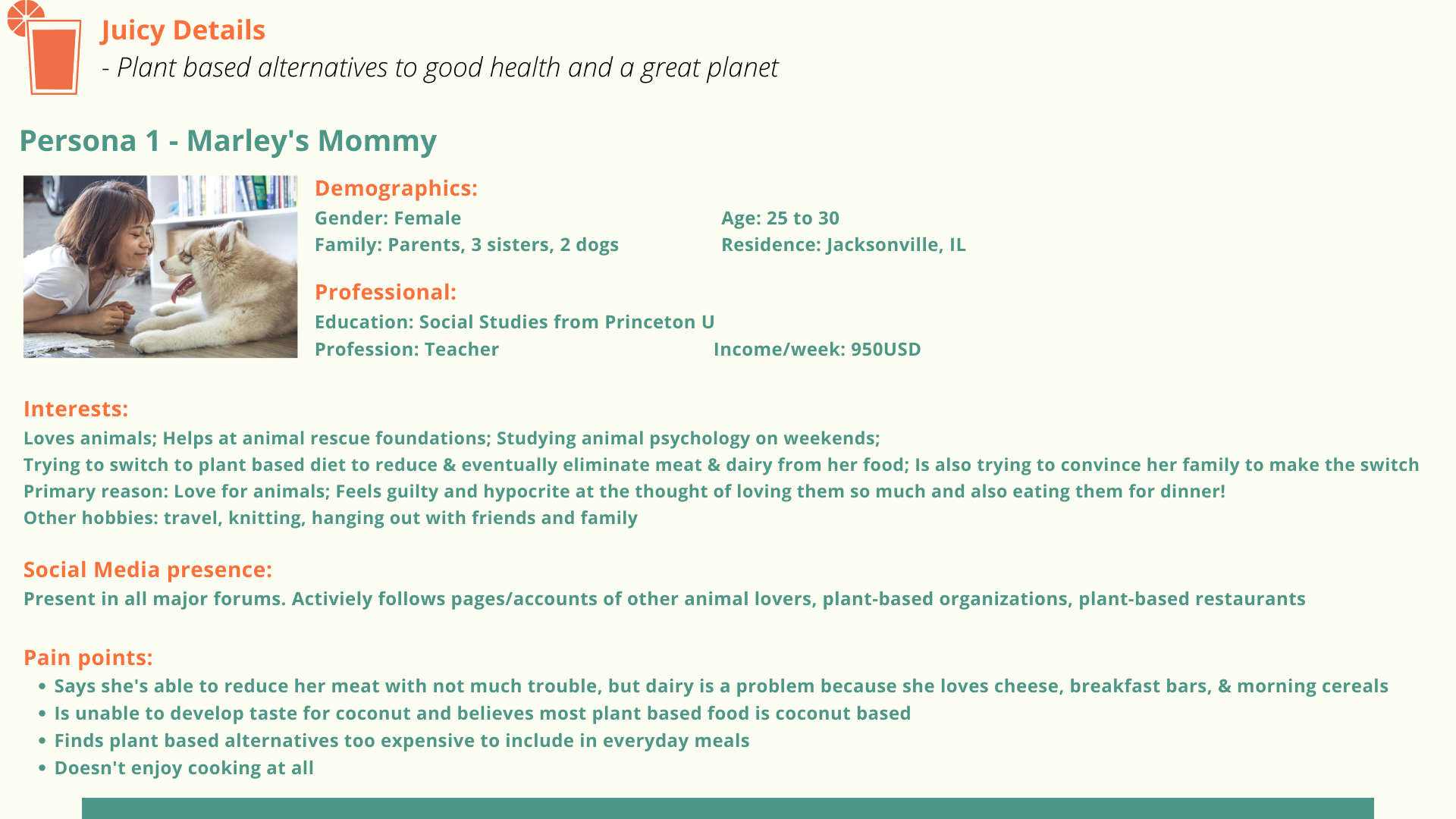
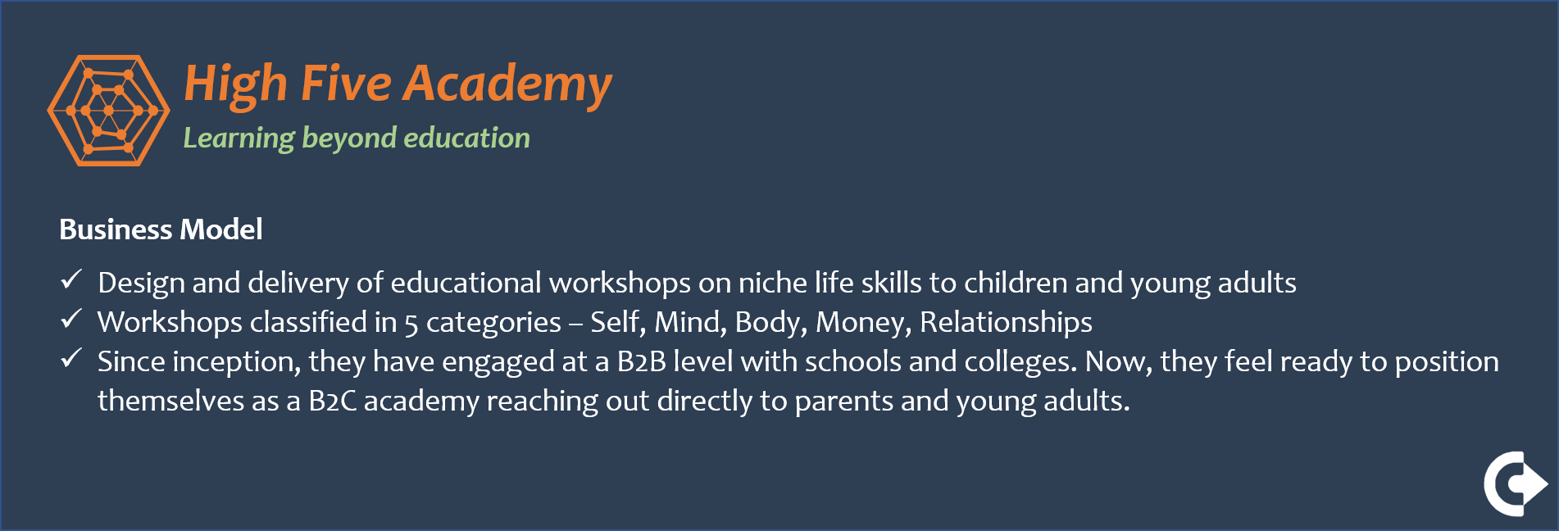
        Let’s look the case of High Five – an online training organization to navigate through this simple, intuitive, and agile process of creating buyer personas.

        Their marketing strategy, communication channels will naturally have to be very different from those they’ve deployed in the past. What should they be? Well, an effective, true-to-its-salt buyer persona should take the guesswork away and answer that for High Five. Grab your cuppa and join me in designing one.

        Stage 1 – Collect information
        Let’s start with the target group of parents. As always – know your outcome. At the end of this entire exercise, you want to walk out with a clear understanding of who they are and why will they purchase your offering. To do so, set out to do some real research. Follow 3 best practices to make this quick and dirty. And useful.

        1. Reach out to consumers of diverse settings – as diverse as is practically possible for you. For High Five, we reached out parents across geographies, income groups, single child, single parent, race, and nationalities etc.

        2. Leverage face to face, telephonic, group, one-on-one or online survey formats.

        3. Don’t restrict yourself to information that buyers give about themselves. You shouldn’t. It’s likely riddled with blind spots. Reach out to other sources who may know about your buyers. Like your customer-facing teams – sales, complaint box reps, tech support etc. 

          Prepare a basic questionnaire to lend speed and accuracy and to ensure you have all areas of importance of covered. You obviously don’t want to get paralyzed with too much analysis nor do you want to presume what your target group wants.

          Keep a small incentive that encourages your consumer group to revert / participate – a discount or a sample.

          Stage 2 – Analyse
          All that psychographic information you’ve collected gives you valuable peek into the personality, aspirations and fears of your ideal buyer. But you must tease that out of that heap of data. At its simplest, it means you:

          1. Clean up your data. Ensure you have all your responses – from all channels and groups – collated.

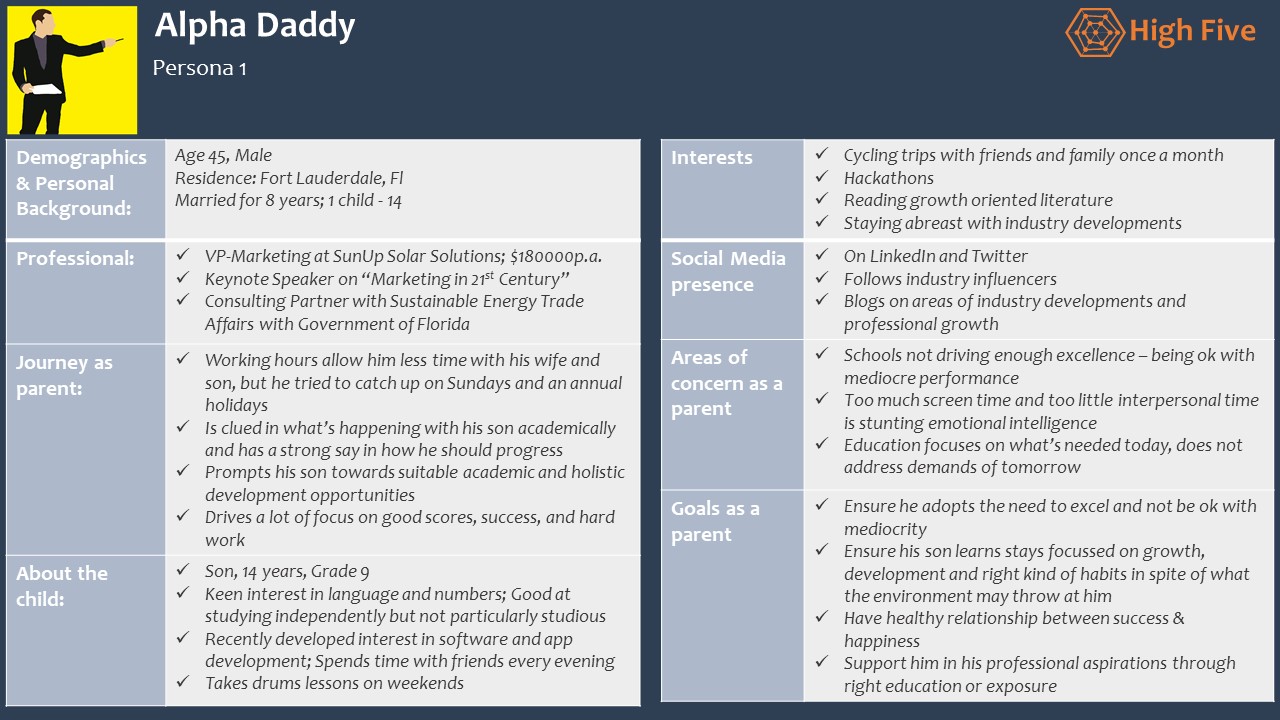
          2. Identify prominent patterns, commonalities, and trends in this data. For instance, in the case of High Five, over 80% parents expressed their wish to see their children become A-players. Their decision to buy anything for their child was driven by how directly they believed it will impact this goal. This pattern screamed loud and clear at us leading to the birth Alpha Daddy – our first buyer persona in the target group of parents.

          2. Create your buyer persona template for reasons of standardization and ease of use. There are several tools and templates out there – for example the customer avatar worksheet by Digital Marketer or HubSpot’s Buyer Persona templates. You may also click on the image above to download an editable template that will ensure you have all essentials.

            4. There’s every possibility you may notice other prominent patterns. Another behaviour, motivator, or a demographic element that screams out at you. That simply means its time for a second or a third buyer persona within your target group. For the parent target group at High Five, we created our second persona called Muscle Mom – inspired by the significantly high number of mothers concerned about lack of right education on physical and mental health.  All our marketing paraphernalia designed for this persona then conveyed to them that we empathize with their concern, and that we can help. 

            HOW do I use them?
            If they’re crafted well, you can use your buyer personas in many-many ways. Here are a few ideas to help develop strategies that can get you to earn your persona’s business.

            1. Map prospects to personas
            To custom-make everything – from sales pitch to your marketing plan. If that’s not easy at the beginning, dip into your persona questionnaire to ask specific questions that can help you do the mapping. For example – “What are your top two aspirations for your child as she moves into being an independent adult?” OR “What health goals are you looking to achieve by choosing plant-based products?”. 

            When mapped, you can trigger automation rules that place prospects into email campaigns or other sales stages tailored to personas. In fact, using CRMs (like Hub Spot) you can upload your buyer personas to find out the type of marketing, communications or sales copy you’ll need or the best tool to reach them.

            2. Paint the right picture
            Direct your graphic designers to design visuals that connect with your target consumer. It’ll be like beating a dead horse if we were to tell how important that is but just to reinforce – remember that humans think in images. Right visuals strike the right chord. They drive your consumers to read your content – which, if written well, will encourage them respond to your call for action. It’s all connected. Really. 

            3. Translate, re-write, compose
            your marketing literature to the language your persona understands. The tone, the visuals, channels of communication say a lot. So, also share your persona details with your writers and have them craft a more resonant copy.

            Using a segment’s pain point to write an email subject line has proven to be hugely successful – “Is education today getting your child ready for tomorrow?”

            4. Build in some clock-work
            Use the research on your segment’s purchasing habits to send timely social ads. If you know that your young professionals purchase at night, ramp-up your Facebook advertising during post dinner hours. Strategically post content that appeals to each one of your buyer personas during time slots and days they’re most likely to view them. 

            5. Navigate through the right channels
            Know which social media channels your audience uses – reach them using the right channels. Utilize tools like Google Analytics to see which social networks appear in your referral traffic report or  https://keyhole.co/ for referring sites for relevant hashtags.

            In toto… 
            Buyer personas are a powerhouse of very useful information. But in our experience, they are highly under-utilized. Mostly because working with them requires an innate desire to be thorough and meticulous, and not always rely on heuristics or commonly held notions about people and behaviours. In fact, only 44 percent of B2B marketers use personas. The top 44% as a matter of fact.

            Invest time and energy in designing these using our easy-to-use and easy-to-customise templates. They will undeniably take you closer to the shoes your customers walk in and give you a nuanced understanding of your their mindset, beliefs, and fears. These, when fed into your marketing and sales efforts, will make your strategies sharp as a tack!

          • 5 Ways to Retaining Customers during Recession

            5 Ways to Retaining Customers during Recession

            Besides our new and improved culinary abilities, the one thing we can all thank COVID19 for is that now when somebody uses abstract words like uncertainty, crisis, ambiguity – our minds are not at loss. They know exactly what this could mean.

            It could be a day when you get ready to open your fancy boutique and realize you’re not allowed to. By Masters of the Universe. Or when you realize that everything you’ve manufactured is contaminated by a spoilt, stubborn mutant. And while these may be uncertainties you and I will witness only once in our lifetimes hopefully, others like take-overs, natural disasters, lockdowns are realities of the world we live in.

            A successful business today needs to evolve to navigate through this volatile landscape. It must, in spite of it as well as because of it, get ready to move away from its business-as-usual practices to find those hidden in-roads that lead to its customers. Quickly and directly.

            That’s exactly what we have here. 5 tried, tested, and proven successful ways to stay in touch with your customers. To keep that engaging tête-à-tête on and fruitful.

            IN THIS BLOG

            1. Hop on to the digital wagon – lock, stock and barrel
            2. Segment your customers and tailor your communication strategy
            3. Build stronger digital in-roads
            4. Craft relevant content
            5. Show empathy

            1. Hop on to the digital wagon – lock, stock and barrel
            COVID-19 has demonstrated the importance of digital readiness like nothing else has. It’s told us, rather loudly, that the only way a business can continue unhindered is when its digital avatar exists. Just as prominently and effectively as its brick-and-mortar version, if not more. 

            Undoubtedly, then, COVID-19 has also triggered massive adoption of digitalization. Forbes reports a 129% year-over-year growth in U.S. & Canadian e-commerce orders in April’2020 and a 146% growth in all online retail orders. Numerous businesses from food to entertainment, to salons, and clothing brands have moved interactions and relationships to COVID-proof digital channels. Some bars in Beijing even continued to offer happy hours through online orders and delivery.

            There’s no better time for you than today to take your business online. It is the most successful business development activity you will undertake to cater to dispersed consumers and workers. A reality that’s likely to stay much after COVID.

            2. Segment your customers and tailor your communication strategy
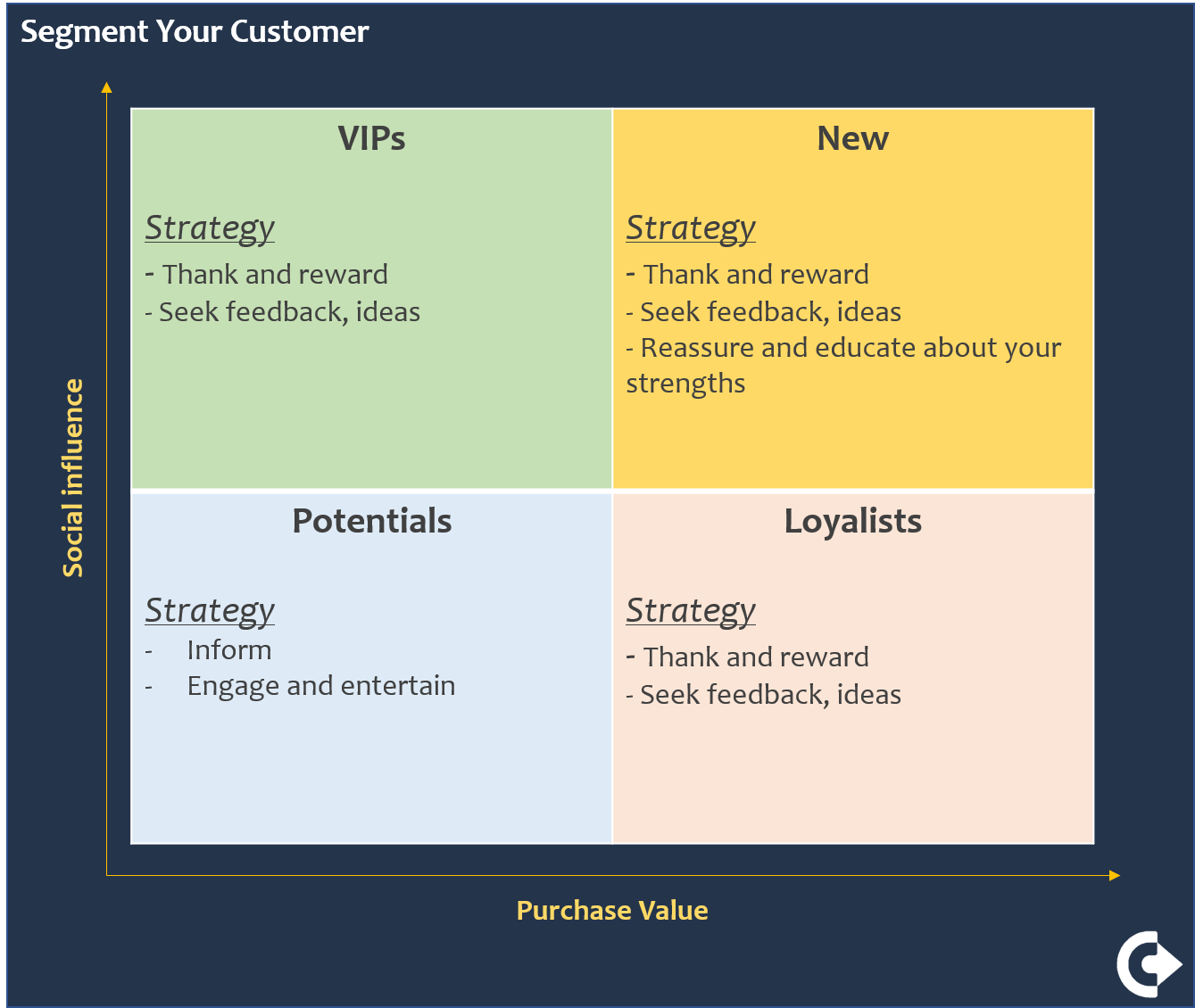
            Your customers belong to one of the following categories.

            a. VIPs – these are your brand advocates who refer other qualified customers. Eg. social media influencers, bloggers etc

            b. New – those who’ve hopped on to your brand wagon recently – last 1 to 6 months

            c. Loyalists – those who have purchased the most over the last 6 to 24 months 

            d. Potentials – enquiries, customer segments you map to your buyer persona

            Segmenting your audience will ensure you share relevant marketing and product information with them. Also, called Product Messaging. It ensures you craft custom messages suitable to a specific segment of your customer base with the exact product/offer for which they’ve indicated interest or are likely to be interested in basis your analysis.

            Utilize competitions that reward customers. Online sales where orders placed within a particular time frame qualify for a free treat are good boosters. They are a good way to engage and are a great client acquisition tool.

            3. Build stronger digital in-roads
            Not just smses and emails, but webinars, online events, workshops, blogs etc. Eg: Urban Clap hosted videos of DIY beauty treatments when the COVID19 lockdown prevented its normal operations.

            With 2.95 billion users, social media is a powerful tool, not just a platform. Use it to connect, share, identify questions, research influencers and other experts. Facebook Live, for instance, is a great free-of-cost marketing feature that you can use to answer customer questions or share relevant advice. Do remember, Facebook Live videos can be saved which you can then use for building other user-based content.

            Update your Google My Business profile – it is the free listing that appears for your business on both Google Maps and Google Local Search results.

            4. Craft Relevant content
            Do not under-estimate the importance of building high impact, entertaining content. There’s a reason why TED Talks stands for Technology, Entertainment, and Design.  Your audiences will come back to you because time spent on your content was fun and informative. Not because it was boring but informative. Probably unfortunate. Definitely true.

            – Build content that gives customers insights and timely advice to aid their online buying decisions.

            – Design content that is scalable and can be utilized to reach a wide range of customers. Videos are hugely successful in this regard and also help replicate the effects of face-to-face interaction. Which, of course, is what you want your content to achieve.

            – Keep your content transparent. Talk about the crisis you are facing and how you’re coping with it. Humanize your brand and open windows to build a connect at an empathic, emotional level.

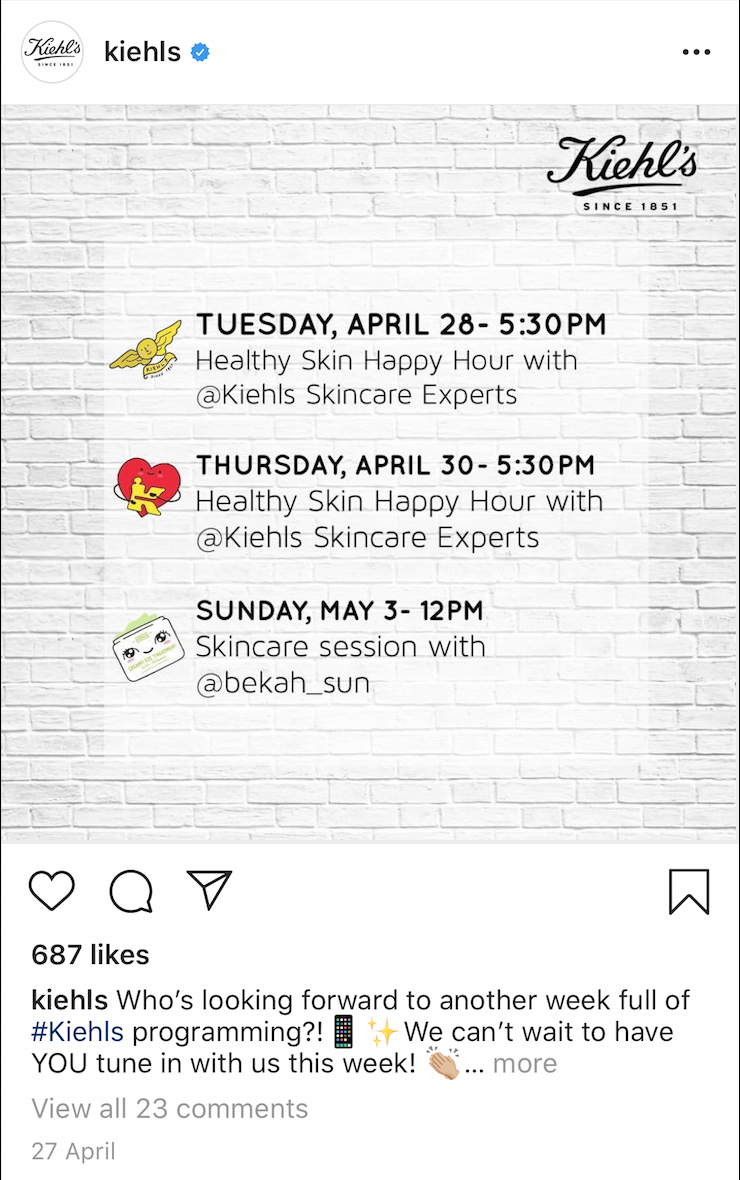
            – Find ways of weaving in human connect through webinars, conferences, interviews, Q&As. This will enable your customers to feel the energy of your organization and be drawn to it.

            – Ramp up the frequency of contact and increase the time you would typically allocate to each customer.

            5. Show empathy
            If your community is facing the consequences of the crisis you’re dealing with, show empathy. Take pressure off from your customers by pausing paid memberships, offering flexibility in refunds, downgrades, discounts, or discontinuations.

            As Mckinsey reports, “By consciously providing empathy and care during this crisis, companies can build a foundation of goodwill and long-lasting emotional connections with the communities they serve.”

            It is a good idea to ensure that your digital efforts are corroborated with a human being. An actual person that your clients can reach out to OR an actual person who can contact clients who are showing stronger signals of disengagement.

            At the end of it all, here’s a little Master Shifu advice for you.

            Happy employees = Happy customers

            Invest in building a supportive, productive, and fun working environment – NOT in spite, but especially because of the crisis tumbling down on you.

            Well designed, and timely digital solutions will speak for you and take your brand far and wide. The human connection you build during such times, through your own face time and that of your employees, will always be the ultimate clincher.

          • How to adapt your market strategies during an economic slowdown?

            How to adapt your market strategies during an economic slowdown?

            In the middle of difficulty lies opportunity. – Albert Einstein

            In case you haven’t heard and read about it already, it is official: we are in recession. According to The World Economic Forum, the shock to the global economy from COVID-19 has been both faster and more severe than the 2008 Global Financial Crisis (GFC) and even the Great Depression. As we grapple with uncertainty and adapt to a changed marketplace, one thing remains clear: our businesses can’t afford to slow down.

            That’s why all across the world, restaurants have adapted quickly to set-up online ordering and delivery services, gyms and yoga studios are changing their conventional operation methods and live-streaming at-home workouts. Also, conferences, events etc that havent been cancelled have gone completely virtual and most brands have adapted their marketing approach and found innovative ways to retain their customers. Most of these businesses have two things in common:

            1. Digital has become their lifeline

            2. They have swiftly adapted to meet the challenges of the unprecedented market situation caused by Covid-19, and more importantly, they haven’t gone completely dark

            IN THIS BLOG

            1. How companies lost their “share of voice” in historic recessions?
            2. How consumer behaviour changes during a recession?
            3. How to recession proof your marketing strategy?
                 i. Niche market analysis 
                ii. Advertising tactics that deliver results
                iii. Your customers first
                iv. Be sensitive and innovative
                v. Double your content marketing efforts

            How companies lost their “share of voice” in historic recessions?
            It wouldn’t be wrong to think that most businesses across the world would cut down on their advertising spends during this period. According to Marketing Week, 86% of marketers are now delaying or reviewing their marketing campaigns. But to understand why this strategy wont work, we only need to look at the examples of companies that went ‘completely dark’ in previous recessions and ceded ground to their competitors.

            During the 1990-91 recession, Pizza Hut and Taco Bell took advantage of McDonald’s decision to drop its marketing budget. Pizza Hut’s share grew by 61% and Taco Bell’s by 40% and McDonald’s reported a drop of 28%.

            In the more recent 2008 recession, Amazon’s share grew by 28% as it increased its ‘share of voice’ through marketing and focusing on innovation, most notably through new Kindle products. The consumers perceived Amazon as an innovative company that offered low-cost alternatives when there was a cash crunch all around.

            So what is a brand’s ‘share of voice’ and what happens to yours when you decide to go dark during a recession? 

            It is the measure of the market your brand owns, compared to your competitors. It shows how much you dominate the conversation in your industry. The more market share you have, the greater popularity and authority you are likely to have among users and prospective customers. While share of voice referred to a brand’s share of paid advertising, it now has a  broader definition that includes various elements of digital marketing, including social media and keyword traffic.
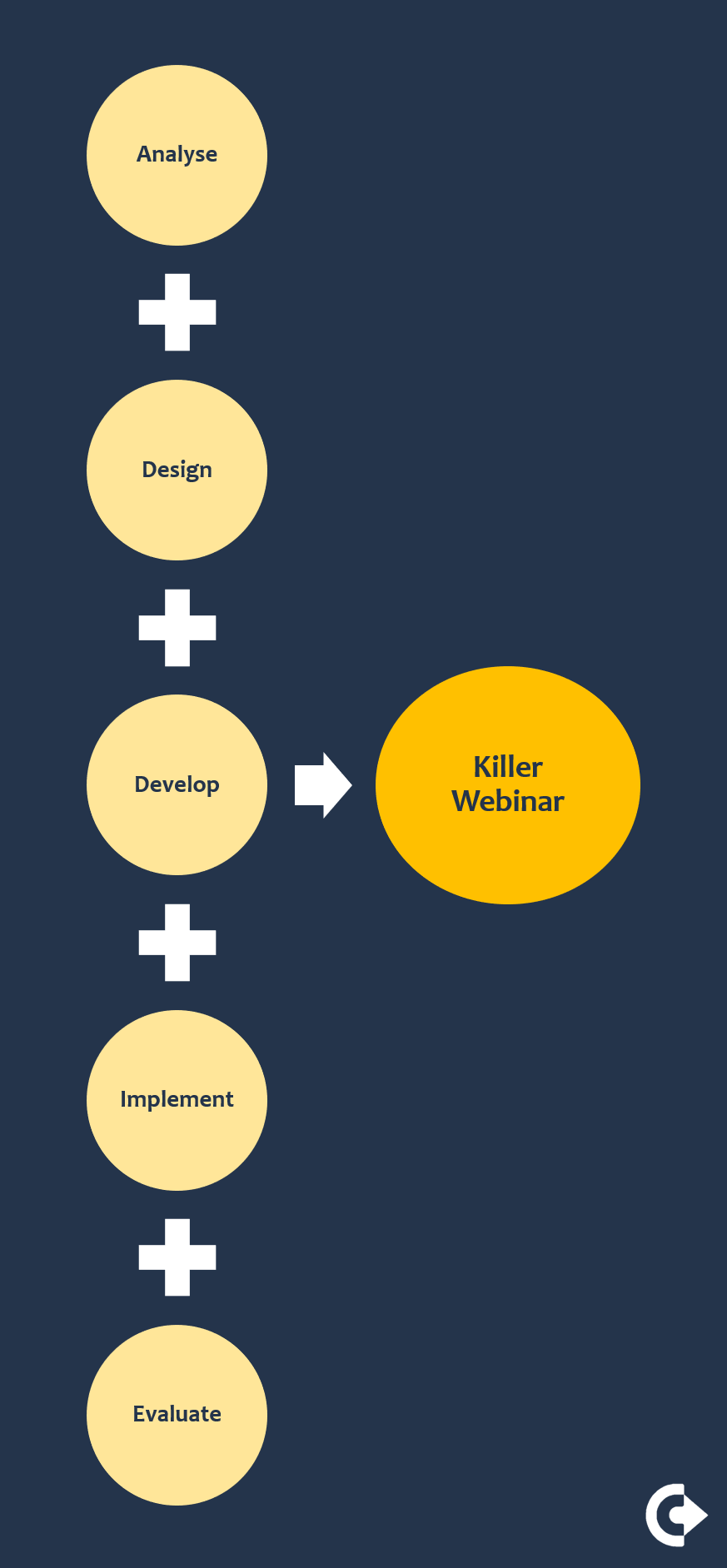
            When a recession happens, other brands pull their marketing budgets, which means your share of voice in that market can only increase. Typically, a 15% share of voice means that you have a 15% market share. Suppose your competitors halve their Ad spends during a recession, it means with the same marketing spend you would now get 30% share of voice. In addition, you also get to project an image of stability to your consumers when you advertise during challenging times.

            On the other hand, brands that deeply cut into their Ad spends and communications budgets in a down period find that  the cost to regain share of voice in the market, once economy turns, is usually four or five times as much as the cuts saved.

            Moral of the story – when a recession hits, do not reduce your Ad spend, this is the time to gain more visibility and increase your market share.

            How consumer behaviour changes during a recession?
            As soon as the global markets start sending those worrying signals, a certain kind of people begin to dominate conversations. For instance, those that have seen their savings or retirement funds wiped out in past recessions. Their narrative – economic downturn, falling markets and job losses will erode buying power and make consumers cautious. Predictably so, consumers at large begin to prioritize consumption by sorting products and services into these four categories – as identified in the Harvard Business Review:

            Essentials are necessary for survival or perceived as central to well-being

            Treats are indulgences whose immediate purchase is considered justifiable

            Postponables are needed or desired items whose purchase can be reasonably put off

            Expendables are perceived as unnecessary or unjustifiable

            Companies that put customer needs under the microscope, take a scalpel rather than a cleaver to the marketing budget, and nimbly adjust strategies, tactics and product offerings in response to shifting demand are more likely than others to flourish – both during and after a recession.
            – Harvard Business Review

            How to recession proof your marketing strategy?
            We looked at why you don’t want to put the kibosh on your advertising during a recession. We’ve also seen how consumers may adjust their buying behavior during an economic downturn. How do you then make sure that your advertising efforts don’t go to waste in a changed market?

            According to Millward Brown, it is crucial to question what each element in your marketing plan is intended to achieve. How will it encourage brand loyalty? What barrier to purchase does it address? Will it make the brand seem worth paying more for, or will it create a belief that this is a cheap brand?

            A majority of brands 10+ years ago were not utilising digital marketing the way they are today. The whole marketing approach has changed and become more data-driven which enables you to pin-point where each advertising dollar should be spent. Audience data analytics along with relevant Ad placements would provide you with valuable insights and more efficient marketing strategies.

            Here is what you need to focus on:

            1. Niche Market Analysis 
            As a brand you need to dive deep into understanding your target customer and how their buying behaviour would change during a recession. It’s crucial to understand how customers reassess priorities and reallocate funds during a downturn. You need to tailor this framework for your own industry, to understand how buyer behaviour will  change depending on whether your offering is an essential, a treat, postponable or expendable.  Use that information to devise a marketing strategy and messaging that resonates with your audience.

            2. Advertising tactics that deliver results
            When the market is slow and sales are tough to come by, a more strategic look at your advertising plan can come to your rescue. Digital Ad solutions can reach consumers at all stages of their awareness and consideration cycle:

            a. Banner Ads, video and native ads build awareness

            b. Custom content communicates a story to your audience

            c. Retargeting keeps your brand on top of their mind
            d. Paid search enables you to reach those who are eagerly looking for solutions


            During a market slow-down, concentrate your ad spend on those tactics and placements that will drive maximum results and give you the best bang for your buck. For instance, if you think advertising to cold traffic usually lowers your ROI, focus your Ad spend more on Retargeting or Paid search, so as to show your ads to mostly those who are still looking to buy.

            3. Your customers first
            The 80-20 rule applies to most businesses. It means 80% of your business comes from 20% of your customers. These 20% customers can become your business’s lifeline during this time. Ask your customers what they need from you. It is crucial that you communicate with them to retain their business. And by ‘communicate’ we mean using multiple platforms to get your message out. Just dropping an email may not be enough. A lot of businesses are reaching out to their customers and offering alternative solutions or innovative ways to keep them engaged.

            Kiehl’s immediately began communicating ‘home-delivery’ solutions to its customers through Emails, SMS and their social media profiles since all their stores had to be shut due to the Covid-19 lockdown. They also started weekly Insta Live sessions with their Skin care experts to help their customers with DIY (do it yourself) tips and in turn stay on top of their mind.


            4. Be sensitive and Innovative
            The campaigns you ran before the pandemic started may not work now. Think about whether your messaging needs to change to be sensitive to the overall mood of your consumers. Everyone is living through unprecedented times with lockdowns, lay-offs and no clarity on how the situation will unfold. 

            This is also the time to consider your core values as an organization. Be innovative if there is an opportunity. Can you pivot your product or service to help your customers? Can you address or solve their pain points? People will always remember who helped them at these times. At the same time, they will remember who tried to profit by preying on insecurity. 

            5. Double your content marketing efforts
            While you may not advertise on all paid media platforms at this time, it could be a great time to focus on Content marketing and SEO. Both Content marketing and SEO are long term efforts, so step into the game now to reap the benefits as and when things start getting back to normal.

            A well devised content marketing strategy should focus on the core value you provide to your customers, and offer timeless solutions to their problems. Think how you could help your customers during and after the economic downturn. What solutions could they be actively searching for? Creating long-form blog posts, e-books, ultimate guides and templates helps build authority in your industry and positions you as an expert.

            While creating content ask yourself:

            a. What keywords do you want to rank for 8-12 months from now?

            b. Is there a product or service niche that you want to be known for?

            c. How can you repurpose your existing content to make it SEO friendly?

            d. What are your core competencies?

            e. How and what can you offer that’s different from your competitors?

            In Conclusion
            While it isn’t clear how long this pandemic-induced recession will last, one thing brands can’t afford is to ‘go dark’ and lose their market share in short or long term. Whether you are a big, well-known brand or a small one, you need to find ways to reach out to your customers, maintain or even increase your marketing spends during this period. A recession should be no reason to stop your advertising or marketing efforts. Like many successful organizations today have, turn towards the astute, money-wise strategies the digital marketing world has to offer. Outside that door you are certain to find opportunities to reach out, maintain connect, and sell to your target consumer.

          • A Step by Step Guide to Your First Killer Webinar

            A Step by Step Guide to Your First Killer Webinar

            Nailing it like pros

            In times when webinars are becoming a norm, it can be daunting for newbies to make their first webinar without the fear of eye rolls. Because obviously, there are good webinars and bad webinars. A good one takes your business closer to its objective and leaves your audience inspired. A bad one… well, it may just get you to witness The Great Migration of your audience to your competitor’s lands. 

            In this blog, we go through a step by step process of creating a good webinar. The one that addresses real issues, bridges real gaps, and takes everybody involved closer to their unique goal post. To do so, we turn towards the super comprehensive and agile ADDIE process. (Don’t let the jargon scare you. Stay with me. The knots will untangle.)


            IN THIS BLOG

            1. ANALYSE the why
            2. DESIGN the what
            3. DEVELOP the content
            4. IMPLEMENT the webinar
            5. EVALUATE results

            Step 1 – ANALYSE the why
            From Cheshire Cat to Simon Sinek – everybody is trying to get us to clarify our big WHY – the raison d’etre of our actions. 


            Your decision to host a webinar is no different. Knowing why you want to host a webinar, why you should invest your time and money on one will help you craft an impactful one. It’ll also go a long way in ensuring that your spirits stay up when you hit roadblocks. Yes, you will hit roadblocks. A few. 

            So, really put that pen to paper and find your answers to these questions. 

            1. What is the Business Objective you want your webinar to impact? Sales, lead generation, customer connect? A clear objective will help scope the webinar, keep you from trying to achieve too much, or tell too much – a pitfall not easy to avoid for subject matter experts.

            Knowing what you want to achieve will guide you to take a calculated decision of how much investment to make. And at the end, how to measure the returns on it.

            2. What are the goals your audience would like to achieve through your webinar/s?

            – Who is your target audience? Know their buyer persona – their motivators + fears.

            – What would give them a distinct feeling of having gained from your webinar? A new skill, a paradigm shift, or a useful freebee? 

            – Think about what real life challenges your webinar can solve for them. Let that be your motif.

              Step 2 – DESIGN the what
              Now is when you scope and plan your Project Webinar. This is the stage which decides whether your final product looks like it is out of a Michelin star kitchen or is a desperate attempt to salvage your reputation in front of your girlfriend. 


              Each of the points below are things you plan right at the outset to reduce your oops moments and reduce the avoidable last minute (& expensive) fixes. 

              1. Choose webinar topic/s that hit that sweet spot of what you and what your audience would want from investing time and effort in this webinar.


              2. Choose the right frequency to host the webinar/s. The 2019 High Growth Study by Hinge Marketing reports that of firms deploying webinars, 68% host multiple times per year, 25% monthly and 7% weekly.

              3. Identify the best format. Remember function dictates form. The goal you wish to achieve should govern the choice of format. Choose from

              – Single presenter

              – Panel discussion

              – Interview with an industry expert

              – Q&A format – driven by audience interaction

              If choosing to host webinars frequently, consider changing your format now and then. Create monthly themes to help your audience see the method in the madness.

              4. What’s the number of registrations, therefore attendance, ideal for your webinar format and goals? In our experience, average attendance rate is 44% and anywhere from 40 t0 50 attendees is good, especially considering engagement and interactions. 

              5. Plan your promotions. Do you have an in-house digital marketing team or will you engage with a firm? What’s going to be your marketing spend, how many days in advance should you start the promotions? At least a fortnight before is strongly recommended.

              Include a short questionnaire – with well thought-out questions – in your registration form. That information will prove to be a goldmine for your content and
              script.

              6. What’s the best duration for each webinar? What’s the best time slot and day to host your webinar? 45 to 60 minutes is a good window to play around with in the beginning. Mind the time zones of your target audience when creating the schedule. 

              7. What are you offering to your attendees? A discount, an access to a special club, free trial, free version, money back guarantee, free evaluation/consultation? What is the time limit that this offer will stand for?

              8. What will be the call to action for your audience? A click on the BUY button, a registration form; a call or meeting with your sales team? A clear call to action is really the difference between an impressive webinar and an impactful one.

              9. Choose your webinar platform. They can cost anywhere from a peanut to an arm and offer just as wide a set of features. The features you need today and will need in the very near future should influence your choice. 

              Ensure the platform supports mobile devices. Over 25% of your attendees will be joining from phone.

              10. Standardize brand guidelines. Colours, fonts, background, logo placement, brand introduction etc. As the line between office and working nooks at home blurs, these become hugely important. 

              If designing the background at home, keep your back towards the wall & face the room. That way, you only need to stage manage the wall instead of an entire room. Keep your light source and camera up and in front to paint a flattering little picture of yourself.

              11. Create essential roles for Project Webinar. You don’t need a buzzing team at your disposal. Find just one additional human to share these responsibilities with.
               
               Marketing & promotion – responsible for launching promotions on time or to liaise with your digital marketing team to get this done

               Audience engagement – before and after the webinar

               Back end support – responsible to launch polls, respond to chats, liaise with live audience; especially needed during the webinar if your format is Q&A or panel discussion

              – Content developer – for your webinar presentation plus promotions and after event engagement will need dedicated time and focus from you or another expert 

              Host/s or Speaker/s – may be the same person or different people

              Sharing the load of presenting your webinar with a co-host creates scope for conversation, banter, and fun. All in all, two engaging hosts are better than one engaging host.

              Step 3 – DEVELOP the content
              In spite of all the professionalism you will exude after nailing items in DESIGN phase, your audience is not likely to come back if the content of that 1-hour webinar has them OD-ing on caffeine – or thoughts of caffeine. Be sure to put in your most creative, your most strategic head here. 

              1. Give your webinar title a thought. It drives your registrations after all. 

              “… for new businesses”; “Quality Tools for modern shop floors” – titles referring to profession, goals, interest, hobbies of your target group have proven to be effective to hook attention.

              2. Structure the content. Like a Table of Content or Index. It will help you build a smooth and logical flow, and allow your audience to navigate better as you speak.

              3. Use this structure to design a compelling landing page for your registrations.

              4. Go through your registration responses. Note their workplaces, cities, interests, problems they want to solve. Weave them into your content. And into your script. Address them before the Q&A section.

              5. You don’t want to sound like a cloyingly polite sales rep with a hidden agenda. So, keep your main points, the tips & tools you’re teaching absolutely distinct from the selling pitch. Handle that as a separate “call for action” section after.

              6. Ensure your slide deck is clean and contemporary. It conveys your ideas well and is predominantly visual. Document design for marketing and sales is a skill. If that’s not your area of expertise, you’re better off engaging with an expert.

              A quick search on “Presentation Templates” will give you bazillion choices of free or paid versions. Some with rather neat designs you can customize to your brand
              guidelines.

              Step 4 – IMPLEMENT the Webinar
              Now, is the time when you serve the dish you’ve so laboriously created in your little Michelin Star kitchen. 

              Before the D-day, ensure that you:

              – Practice. A lot of webinar platforms allow you to launch a practice instance. Utilize that to nail your script. Do this especially thoroughly if the webinar has more than 1 speaker

              – Practice launching of polls, typing in timely responses to the chats etc with your backend support buddy

              – Check visuals, lighting, background, audio, internet speed

              Aim for internet upload speed of over 5Mbps to host a smooth webinar. You can test your upload speed at SpeedTest.net.

              On the D-day, ensure:

              – You and your team launch the webinar at least 30 minutes in advance

              – You get the fundamentals right – start and end on time; look professional and relatable; smile; mind your Ps and Qs

              Once the event is over, send a Thank You note within 24 hours. In this, consider including:

              – Highlights of the webinar 

              – Short (not more 3 questions preferably) feedback questionnaire

              – Questions to seek opinions on what they’d want to know more about, and what would encourage them to be a part of the next one

              Step 5 – EVALUATE Results
              The feedback forms – if your audience does respond, will give you food for thought. And if you’re lucky, a clear direction towards your “what next?”. But effective measurement of ROI is a different league. And, nope, it’s not for the weak hearted. Especially if your webinar is about customer-education. Or product-demos near the bottom of the funnel but not quite the last touch in your buyer’s journey. Even when sales is the ultimate goal, there are several ways to handle webinar ROI.

              Number of registrants – use this metric monitor growth of your webinar audience and topics that attract the most attendees

              Attendance rate – how many registrants actually attend the webinar

              Engagement/interest rate – hidden behind proprietary algorithms of webinar software, it’s an indicator of how engaged your audience is. A high engagement rate could potentially mean high leads

              Number of generated leads – knowing how many leads can be attributed to the webinar (or any marketing channel) is powerful – a good CRM can help you that; for small to medium businesses – a quick post sales survey can help too

              Revenue per lead – understanding value of a lead helps measure ROI of that channel. If a lead is worth $500, the webinar production cost is $250, and it generates two leads – you have a return of $750 for your investment in the webinar.

              Decide which metric is most relevant for you at the beginning – during the ANALYZE stage and make it known to your team. This ensures everybody puts in concentrated efforts towards a common goal.

              In conclusion
              The ability to craft a great webinar and take it to the right audience can be life-changing – for you and your business. Nail the planning and give yourself a 30-day period to launch your first one. Download this checklist + scheduler + ROI calculator designed by the marketing nerds at CTC to help you stay you on track.

              • How Webinars Can Help in Times of Uncertainty?

                How Webinars Can Help in Times of Uncertainty?

                Utilizing webinars in a VUCA world

                The world we live in today is an uncertain, fickle-headed place. It’s the truth we’re all finding ways to come to terms with as the Corona story unfolds. And while the Corona issue is an obvious contributor, there are several other factors that make our world today rather VUCA (Volatile, Uncertain, Complex, Ambiguous).  To name a few – the diminishing line between business and political leaders, the maddening pace of technological changes, increasing need to access global talent, or the need for all things “instant” by customers & employees. 

                So, what do these uncertain times demand of modern-day businesses? How do businesses stay profitable in such an environment? By ensuring that their communication channels with employees, investors, and customers stay open – at all times and in spite of odds. 

                Enter Webinars. As a medium to establish real-time, face-to-face contact with stakeholders spread across the world; to utilize creative ways to build brands, generate leads, even sell. As a medium to build deep, meaningful relations. 

                Admittedly, the webinar is first a marketing tool. And a great one at that. While there are many marketing tools that could be used at a time like this (like pay per click or email marketing), webinars come in as the #1 choice because they allow you to demonstrate your product, service or idea to a live audience. The trick is, of course, to be able to do it right.

                Read below to see what a webinar done well means, how that can be the instant answer to mitigating business uncertainties and branching away from a single business model.

                Before we dive in, here is a quick statistic by ON24

                – 89% hosts agreed that the webinar is their platform of choice to showcase and grow their business

                – 95% respondents agreed on webinars as a key to their lead generation and marketing efforts

                – 75% reported that they use webinars to build their brand

                – 76% achieved more leads by running webinars

                – 69% respondents scaled up their market through webinars

                IN THIS BLOG

                1. Why do businesses need to adopt webinars today?
                2. Types of webinars
                3. Top 8 business goals you can achieve through a great webinar (with real life stories and best practices)
                    i. Lead Generation
                    ii. Sales
                    iii. Branding
                    iv. Creating value
                    v. Events
                    vi. Training
                    vii. Education
                    viii. Product Demo
                4. In Conclusion

                Why do businesses need to adopt webinars today?

                Here are a few ways in which webinars impact the 3 big levers of your business.


                Types of webinars
                Classified simply on the basis of how you host a webinar, there are 2 variations.

                Live
                A live webinar is an online meeting or a presentation held in real time. The presenter or the host connects with numerous attendees from different locations. It’s big plus lies in giving its attendees the ability to interact, exchange body language cues, and therefore afford a real conversation.

                On Demand
                This is a recorded webinar used for viewing “on-demand” by new attendees whenever they want to. The big plus here is that the viewer can attend it at his/her convenience.


                Top 8 business goals you can achieve through a great webinar

                Lead Generation
                A lead generation webinar is one of the most common types of webinars offered today. This webinar is chock-full of expert advice and attempts to solve a real problem for its viewers. It is important to understand that when you offer this type of a webinar, your advice should stand independent of your product or service, making it a largely non-selling webinar.

                To achieve this, bridge the gap between knowledge and information. Do share knowledge about the industry, about best practices etc but not explicit and detailed information about your product. If the knowledge you share is relevant and presented well, it will establish your credibility with your prospects. That means they will come back for more.

                When you share valuable knowledge through your content, not only do you get a new lead and a chance to sell, but you establish your brand much before the customer has consumed your product or service.

                Content that establishes your expertise + Content that solves real problems + Content presented well
                =
                An effective lead generation webinar

                In a lead gen webinar, providing valuable content directly contributes to your ability to collect valuable information from your customers

                Take the example of Hubspot –  an online marketing, sales and service software.  Their website has a section dedicated to valuable on-demand webinars that solve business problems their current or potential customers may face. This gated content library is used to secure leads on an ongoing basis. Here is what their webinar library currently looks like.

                At the same time, ensure you utilize your live as well as on-demand webinars to generate leads.

                A study by Gotowebinar suggests that 73% of professionals prefer on demand videos over live videos. As long as you are delivering enough value via your content, you will keep increasing the lead flow into your business.

                Here are some best practices to design a Lead Generation webinar that give an adrenalin boost to your marketing efforts.

                Do’s:

                – Choose a topic that your target audience identifies with

                – Focus on adding value and building credibility. Your goal, at this stage, is to ensure that you become the preferred point of contact for anyone seeking a solution within your industry

                – Invite an industry expert as a guest speaker – it helps establish credibility

                – Invite a guest speaker who is an expert – it adds credibility

                – Use interactive tools. Involve your audience, allow them to ask and share opinions. Keep a slot for Q& A in live webinar and an option to fire-off questions via forms/emails in on-demand ones

                – Respond. Always and on the promised turn around time

                – Send follow up emails/newsletters with more valuable content on an ongoing basis

                – Finally, attach contact forms. That’s a great way to narrow down leads. Ask relevant questions but don’t make it too long. We’re yet to meet anybody who loves filling long forms!

                Don’ts:

                – Target audience without looking at their specific interests and problems

                – Drone on about yourself and your company in the very beginning of the webinar (at least not for very long)

                – Focus on selling in the start or the middle of the webinar. If you must, throw it in towards the end

                Sales
                A sales webinar’s primary objective is to sell. And most experts will agree that you can sell anything on a webinar. In a study, ON24 analyzed the conversion rates for webinars with a minimum of 100 attendees. The study concluded that:

                – Webinars related to communication got 67.05% conversions

                – Training webinars got 44.79% conversions

                – Marketing webinars achieved 39.10%

                – And education webinars got 30.79%

                With our experience in helping businesses market online, we can honestly say that it is never easy making a sale when the potential customer first comes in contact with your service or product. There needs to be enough trust in the mind of your potential customer to buy from you. And that building of trust doesn’t happen overnight. It’s got to be built. So, the only way a webinar with sales as its objective succeeds is when the host strives to build a strong connection with attendees. On a human and emotional level.

                There are some businesses that have a proven track record of sales success on webinars.

                Our research confirms that knowledge-based services or products that allow users to continue learning in the medium that’s similar to the webinar itself are ideal for selling.

                An example is a webinar that sells online coaching to students. The webinar talks about the coach’s credentials, coaching methodology and fees. The user then goes to the page, fills up the subscription form and starts attending the online coaching class. It is a seamless process.

                Lewis Howes went from being broke to earning $6300 per hour from his first webinar series! Today, he is a lifestyle entrepreneur, high performance business coach and keynote speaker. And it all started with a book he wrote and an invitation to be a guest speaker on his friend’s webinar. The story of how Lewis structured that webinar is very interesting too. He had a 1-hour slot in which to speak about LinkedIn in this free promotional webinar. He offered very valuable advice for the better part of the webinar and then threw in a free LinkedIn training for 50 minutes towards the end. And just before ending the webinar, he opened up 10 exclusive spots for advanced LinkedIn training for a completely customised approach at a 50% discount for a limited number of hours. He walked away with $6300 in his Paypal account.

                So, what is that you can really sell well over a webinar?

                – Digital products

                – Real products

                – Services

                – Workshops and seminars

                – Online & offline memberships

                – Private & group coaching

                Branding
                Some of the best webinars out there today are hosted by people who have established their authority in their field of work. People attend seminars, courses and undergo coaching when they are interested in a particular subject and want to learn from an expert. Similarly, hosting a webinar on specialised topics positions you as an expert, increases your credibility and ultimately helps you create your own brand.

                The question that could be asked is, does one really need to be an established name or brand to host a webinar and expect people to attend? The answer to that is a big NO. 

                Webinars offer a perfect platform for you to build your own brand from scratch. You don’t need a finished product, a mailing list or even a social following, you can literally build your business with webinars. If you can establish authority in your area of expertise by offering solutions to problems that a majority of your target audience might be facing, you can set up your business using only webinars and scale from there.

                If you are interested in increasing your brand value, get in your industry experts and have them share content designed exclusively for your webinars. This is a great way to co-market as well as introduce yourself to new audiences!

                These best practices will make sure your brand building webinar gives you the perfect bang for your buck.

                – Ensure your topics are really well researched and tie in with whatever is most current. Take cues from topics covered by SEMrush

                – When choosing the industry experts, examine their existing social branding. It is important, if not mandatory, that your expert have a decent following online

                – Brand all material and content you share before and after

                – Market your webinars well in advance; 7-10 days prior to the event is ideal

                – Record and create an on-demand library and make them available on your website

                Creating value
                Until now we’ve seen how webinars can be an effective marketing tool at the top of your marketing funnel. However, webinars can also be used to create value for your existing customers. Value creating webinars are a bit different from lead generation or sales webinars in the sense that they do not necessarily “always” talk about your product or service. The idea here is to provide value to your existing customers by focusing on relieving audience’s pain or enhancing quality instead of self-promotion. These webinars offer such good value content that consumers can’t help but share through word of mouth or social media shares and likes.

                Trello has a great on-demand webinar hub. Even a cursory glance will tell you that this hub isn’t all about what Trello does. They’ve thrown in a great mix of webinars which aim at general business and productivity content. All these webinars create value for their existing user base and are a great way for Trello to also collect valuable potential customer data.

                If you have a business, you’re certainly in a place that impacts an aspect of your consumer’s lives. Pull out your expertise, connect with your industry experts, and craft webinars that improve your customer’s lives.

                Events
                A “webinar-based” or “virtual” event is where you hold conferences, meeting, trade shows over the webinar. These can be of 2 kinds – (i) a “pure bred” webinar event where you’re only engaging with audiences virtually; (ii) a “cross” or a hybrid event where you engage with a live “in-person” audience as well as with a virtual one simultaneously. In either case, a well-planned, successful webinar-based event ensures you reach a wider audience, improve event ROI, and get access to valuable data points you may not get otherwise.

                In the year 2020, choosing to host a web-based event also means you do not have to cancel or push your event to another year or to a different planet. 

                Yellow co., amongst many others, has converted its annual Yellow Conference into a virtual format. 

                There are several creative ways in which you can host a web-based event. Take your cue from Apple Special Events with Tim Cook announcing the launch of the next Apple gadget to his live & virtual audience. Or, Social Media Examiner, which sells virtual tickets to its annual Social Media Marketing World conference – the biggest live event in the social media world. The virtual attendees get access to the recorded conference as well as to a private networking group to meet and communicate with peers. Organizations like Moz and Content Marketing World record their annual conferences to curate a compelling on-demand library. These are then made available post the event free of cost or at a price. 

                If a large event involving your internal and/or external stakeholders is what you had in mind for 2020, we suggest you don’t let the Corona monster derail your plans. Choose a webinar-based path and start planning now. Do ensure:

                – hosting virtual events requires the same care & attention as hosting physical events

                – to not drop the ball on your planning and preparation during the complete event cycle

                – to bring strong facilitation – virtual emceeing is done at a slower pace than face to face emceeing

                Cycle of a successful event


                Training
                You have most undoubtedly witnessed the webinar in its avatar as a learning tool in last few weeks of the world dealing with the COVID19 menace. 

                A business objective that the webinar is perfectly tailor-made to achieve is that of training far-flung, dispersed learners. From employees to customers, from niche or complex application trainings, to the fuzzy & nebulous ones on behaviour and performance. The webinar offers a great solution. 

                A 2019 study funded by the Federal Ministry of Education and Research, Germany attempted to understand how webinars performed in comparison to online and face-to-face instruction in promoting learning and satisfaction. The study concluded that with regard to learning effects, webinars appeared to be equal to face-to-face learning. This was attributed to its built-in capability to promote interaction.

                What’s more? Converting your training sessions into webinars does not require you to reinvent the wheel. You can utilize your existing presentations, handouts, and other collaterals. Just keep in mind different learning styles while synthesizing the content into 50-60 minutes cohesive chunks. 

                Very early on in this journey with webinar trainings, you will appreciate how you’re able to expand your reach, augment e-learning – if any, and build engagement. All this while saving time and cost! 

                Multinational software organization Citrix Systems, Inc. until recently spent over $600,000 per year to conduct in-person trainings for its new employees in every new region it expanded to. The last 2 years, however, have seen Citrix build the same level of engaged and immersive learning experience through webinars. In Citrix’s experience, training webinars have substantially lowered the barriers to global expansion & up-skilling of employees. 

                You can use it too to offer an immersive & sticky learning experience to your learners. Just remember to:

                – Leverage interaction tools like text-chat, poll, hand-raise, voting, drawing in every session

                – Put together compelling content – focused, driven by learner needs, and diverse. Weave in e-learning courses, videos, audios, images, presentations, tests, multiple presenters etc.

                – Follow up with feedback questionnaires and assessments to keep the engagement alive 

                Education
                Webinars allow schools and colleges to offer a blended learning model of pedagogy. They get to host their lectures live and on demand to students spread across. And students get to complete their degrees and diplomas from anywhere, yet gain from the rich experience of being guided by a teacher. 

                Webinars have come in most handy today as the education industry grapples with curriculums in a locked-down world. Nearly every education institute – from kindergartens to universities – is utilizing them to reach out to its students in the safety of their homes.

                According to a study by the U.S. Department of Education, “on average, students in online learning conditions performed modestly better than those receiving face-to-face
                instruction.”

                Recent years have also seen the education industry evolve to leverage the webinar as a tool to engage with its prospective students. Forums such as open days online, virtual campus tours, online meetings, online recruitment guide help universities give their prospective students a first-hand understanding of the life in store for them. 

                Universities like the Durham University Business School (DUBS) replicate the grandeur of their physical open days in their Virtual Open Day. In a webinar branded in DUBS signature style, students move across 16 individual sessions on a variety of topics to learn from a faculty and interact with them. Outcome – the university exceeded its registration target by 36% and over 60% of registrants stayed engaged with the event throughout (industry average). 

                If expanding your reach as an education institute is your objective, it’s time you adopt webinars. Remember:

                – When offering a blended model of pedagogy, supporting your learning community with a variety of tools is essential. These may include – email support, video/audio meetings in one-on-one or small group format

                – Build student interaction by means of collaborative tasks that get them to engage with each other

                – Follow up and share learning resources – handouts, lecture recordings, assessment

                Product Demo
                A product demonstration using webinar tools including screenshare, application sharing, integrated videos clips, or simply an on-camera demonstration comprises nearly 39% of all webinars hosted on Click Meeting. A deminar, as its often called, enables you to demonstrate your product or service while having a real-time conversation with your prospects. 

                Let’s take for example the SaaS industry. Most of the applications and platforms these organizations sell are complex and comprise plenty of features seeking clear explanation. So, while video based product demos win hands down in comparison to traditional product literature, Webinars offer an additional advantage of interaction. 

                71 percent of people buy because they like, trust and respect the salesperson they have engaged with. Live product demo webinars, augmented with features like chat, hand-raisers, online poll help you build conversations and relationships.

                Actuate, an embedded analytic software company, acquired by Open Text, started leveraging branded live and on-demand webinars to reach out to its customers. The increased frequency of live demos and quality archived content had a pretty dramatic effect on the results within the first quarter. The organization saw a 25% increase in new contacts from the bi-weekly product demos, a 65% registration to attendee rate for the demos.  Almost 90% of webinar attendees stayed for the entire event.

                Product demo webinars, used as bottom-of-the-funnel webinars are built to give your prospects the information and comfort they need to make that final purchase decision. To craft a powerful one, remember to:

                – Craft your script intelligently and passionately. Webinars work because they allow your customers to see that

                – Highlight your brand, product USP, share testimonials – explicitly

                – Leverages webinar tools like screen sharing, application sharing, and video recordings to keep it engaging

                In conclusion
                From learning yoga to shortlisting the next kitchen gadget, a lot is happening over webinars. This ubiquitous, simple tool has stepped up and come to our rescue to help us inform, connect, and engage with fellow humans in 2020. As a result, the rise of webinars as a business tool of the year has been unmistakable. ON24 reports a 66% jump from the number of webinars hosted in Mar 2019 to Mar2020. There’s a high chance you have either already attended or are planning to attend at least one during the current month.

                So, if you’re not using webinars already to meet your business goal, now is the time. If you are using it, widen your options and bring a variety of tools and features into your webinars. Explore other ways to truly harness its potential. Do check our step-by-step guide to designing a perfect webinar for a deep dive by our experts into what works and what doesn’t.