Category: Paid Traffic

Paid Traffic

  • 3 Steps To Get Your Disabled Facebook Ad Account Back Up and Running Instantly

    3 Steps To Get Your Disabled Facebook Ad Account Back Up and Running Instantly

    As most of us have come to know, getting any sort of response from a real person at Facebook is an almost impossible task. 

    Facebook has a tendency of disapproving Ads and disabling Ad accounts quite often. A lot of times Ad accounts get disabled without any clear policy violations or the policy may be ambiguous for many advertisers. Most of the time Facebook wont even clearly mention which policy is being violated, which can be really frustrating.

    It is worth noting here that if you are trying to run Ads that clearly violate Facebook’s Ad policies, your Ad account will get disabled and usually it isn’t possible to recover such an Ad account. 

    So rule no.1 is – DO NOT BE IN CLEAR VIOLATION OF FACEBOOK’S AD POLICY. Read and understand the policy to know what you can or cannot say in your ads.

    However, if you are sure your ads are in compliance with the policy and/or you are not absolutely sure which policy your ads may be against, it is best to contact Facebook Support and request for a review of your account.

    Another reason why you may want to request a review (and get your account re-enabled) is that any Ad account that’s barred from advertising has an adverse effect on your Business Manager as well (especially if your Business Manager is a new one).  

    It is quite likely that Facebook will disable a new Ad account that you try and create for the same ads and maybe even the entire Business Manager.

    Facebook also tracks your IP address, so if you try to trick it by creating new Business Managers and/or Ad accounts, it will track that down through your IP address and disable those as well.

    In short, to avoid all the pain that comes with disabled ad accounts and Business Managers, it is best to first make sure you are thorough with Facebook’s Ad policy and that you try as much as possible to remain within its bounds. 

    However, if you still end up with a disabled Ad account, follow the steps below to try and get your Ad account back up as soon as possible (within 30 minutes, if you’re lucky).

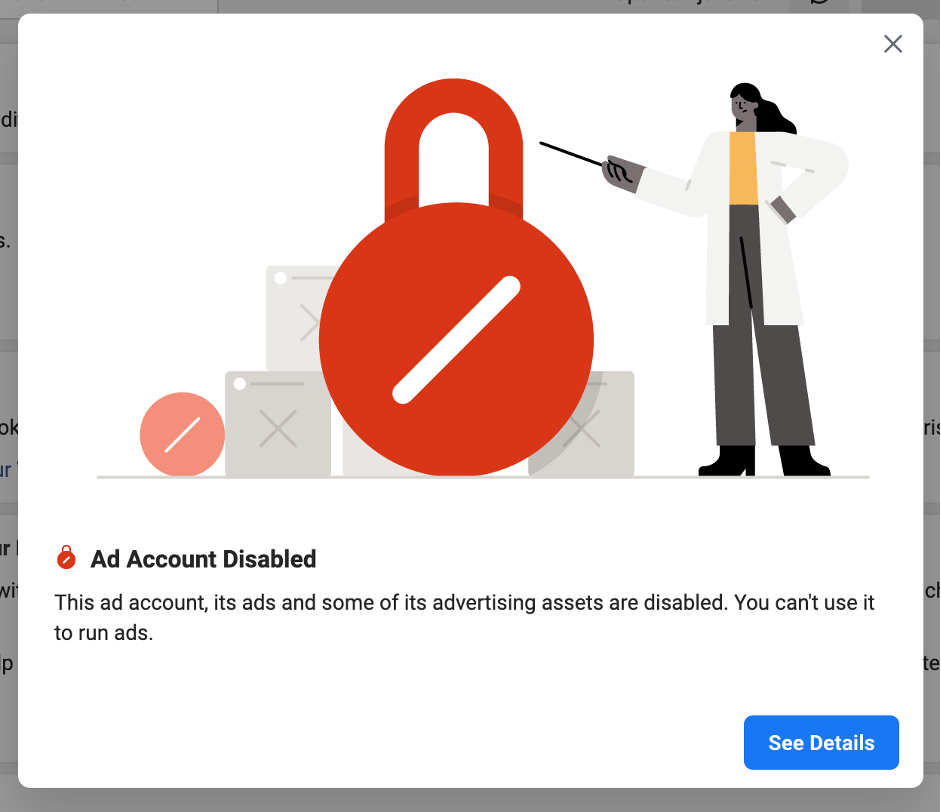
    So the moment you see that dreaded notification (like the one shown below), you need to take action straightaway:

    Step 1: Raise a Review Request

    The first thing you want to do is “See Details” to know the reason for your Ad account disapproval. Typically, it will just be shown as ‘Policy Violation’ (sometimes it could be a payment declined issue, so you want to make sure what the issue is before taking further action).

    Another way to do this is to go to the “Account Quality” section and then select the account in question.
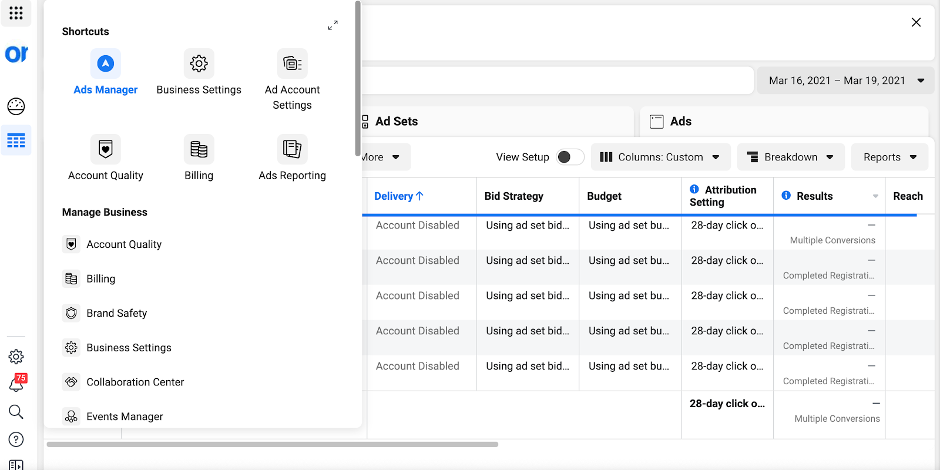
    The best thing to do here is to “Request a Review”. Simply follow the steps to submit a review request to Facebook.

    You will be asked to write an explanation as to why your account should be re-activated. 

    From my experience dealing with disabled accounts in our agency, it is best not to get into too much detail here. You may just want to mention that you are sure that none of the Ads violate any Ad policy and all the creatives and landing pages follow the policy as well.

    It always helps to mention that you have gone through the entire Ad policy as given in <copy paste the Ad policy link> and that you are sure that none of the Ads are in violation of any of the policies mentioned therein. Once you’ve mentioned that, request them to re-activate the Ad account as soon as possible. 

    Always remember to use a friendly tone and not sound too irate or angry. That would never help.

    Now most people just submit a review request and wait for Facebook to take action. 

    The problem is Facebook can sometimes take as long as a week to get back to you for Ad account review cases. But that wouldn’t help if you have Ads running for a client or your own business. You definitely want the Ad account to be up and running much faster, within an hour or a couple of hours at max.

    To help with a faster review process, it is best to reach out to Facebook Chat support as shown in Step 2.


    Step 2: Connect with Facebook Chat Support

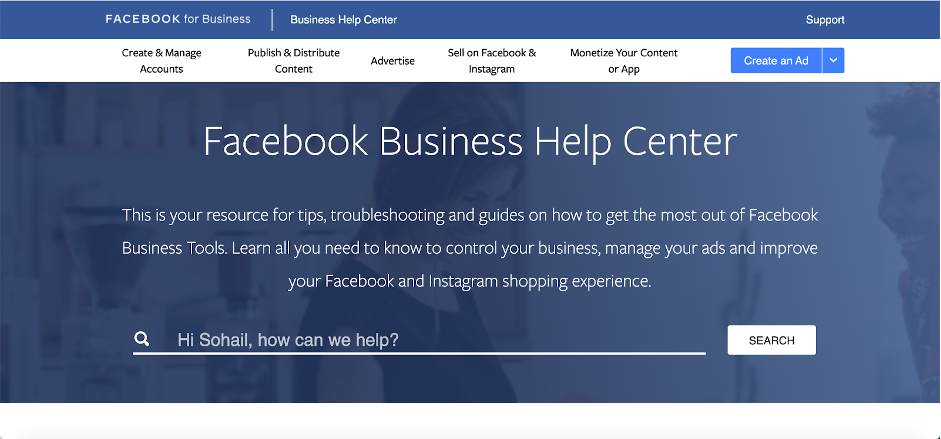
    Go to Facebook Business Help Centre: https://www.facebook.com/business/help
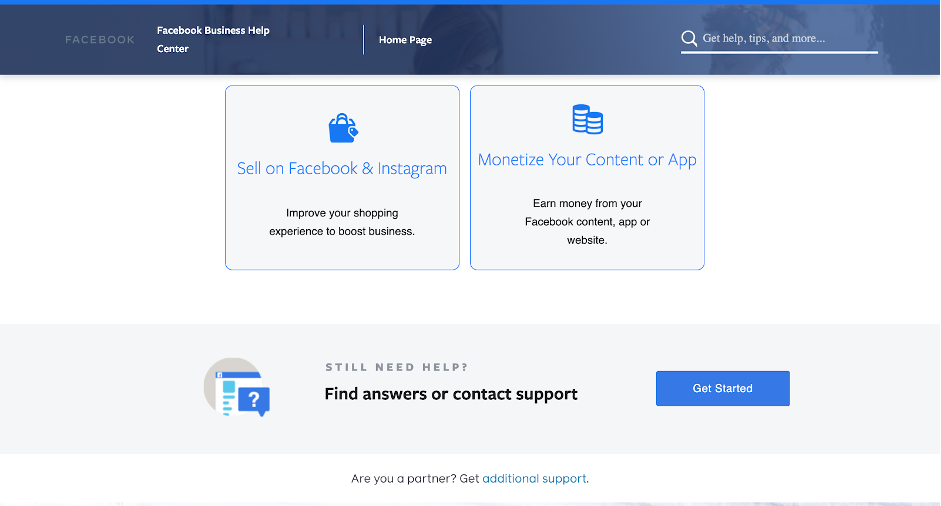
    Scroll to the bottom of the page till you reach the “Still Need Help” section shown below and click on “Get Started”:
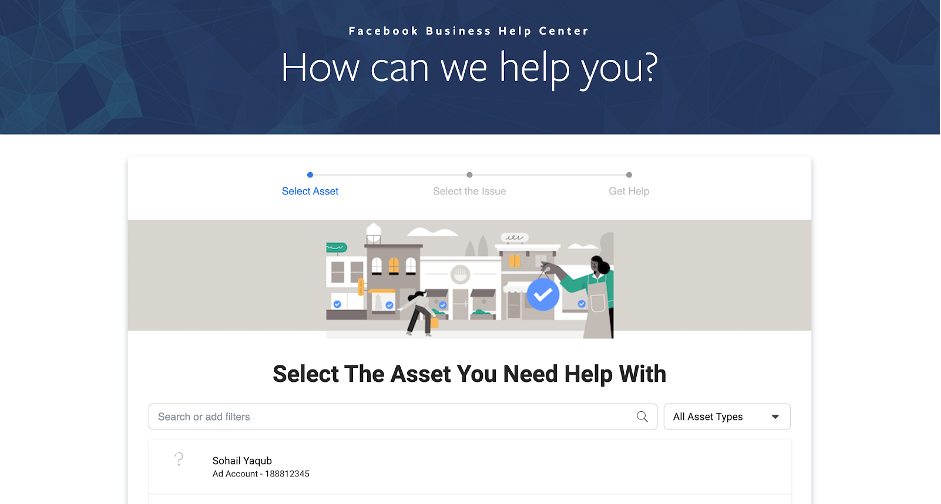
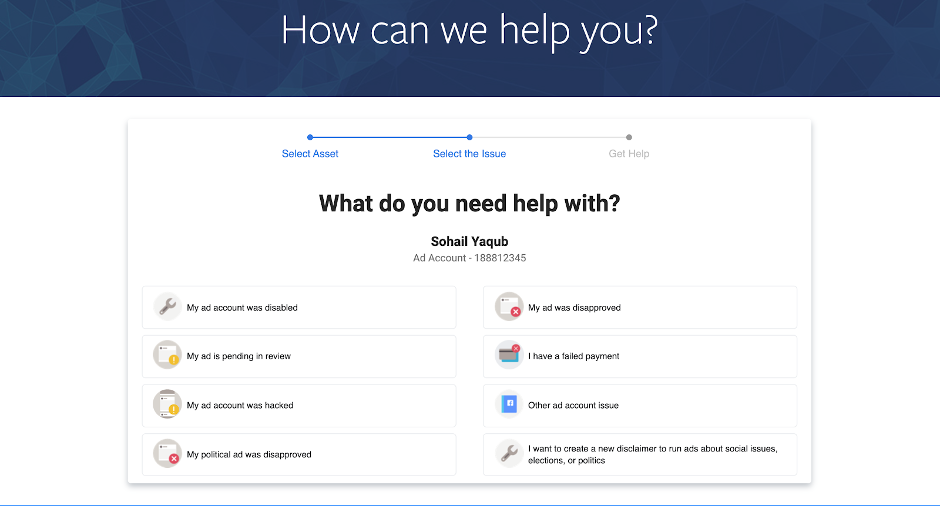
    The next page will ask you to select the asset you need help with. From the list of assets, select the Ad account that has been disabled:
    On the next page, select the “My Ad account was disabled” option:
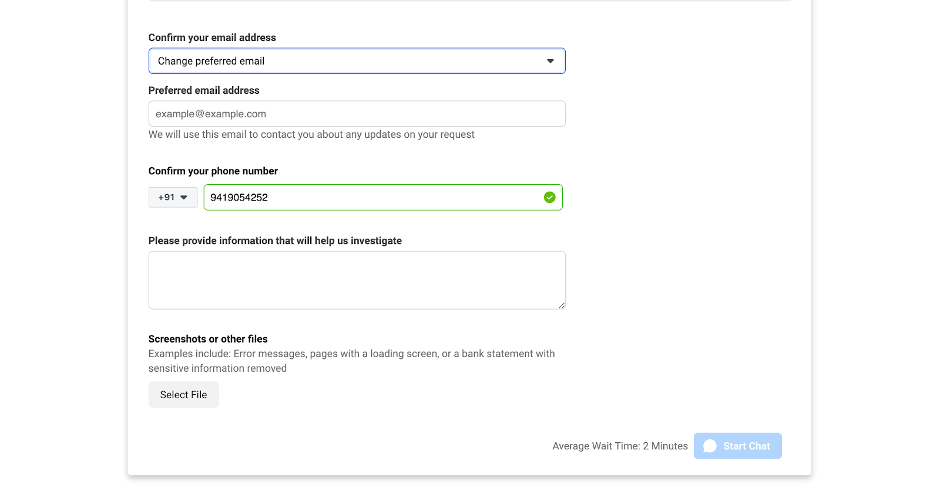
    Next, enter your email ID & phone number (usually these auto-populate) and write a brief explanation which can be the same as your review request appeal.

    Once you have entered these details, you should see the “Start Chart” tab at the bottom of the page get illuminated (it will also show the wait time). That is what your aim is. Normally it is very difficult to get hold of Chat support from Facebook. Facebook doesn’t advertise it as well for obvious reasons.
    So the whole idea of doing this step is to get hold of a Facebook support rep who can start looking at your issue straightaway. Remember, you are doing this so that you don’t have to wait for days/weeks to get your account reactivated. 

    At our agency, we have had accounts activated within 30 minutes by following this process.

    If your account has been incorrectly disabled, you are almost guaranteed to get it back through this method. If, however, you come across a support rep who is not sure and asks you to wait for a day or two while they look at it. Thank them and log out of that chat.

    Then start another chat session by following the exact steps mentioned above. 

    Just like all services there will be some support reps who may not help you straight away, but there will be a few who will look into resolving your issue on that chat itself. All you have to do is find them (and if you are lucky you’ll get them within the first or second attempt).


    Step 3: Reach out to your Facebook Marketing Expert

    If Step 2 doesn’t work or you were asked to wait for a day or two by the Chat Support Representative, the next thing you can do is reach out to the Facebook Marketing Expert that may have been assigned to you.

    Facebook assigns a Marketing Expert to most Ad accounts. You would typically receive an email from the expert asking you to schedule a call with them to go through the performance of your ad account. 

    If you have already connected with them, then this is the best time to make use of that expert. Write to them about your Ad account being disabled and ask them for their help to get it re-enabled. 

    A lot of Facebook Marketing Experts will step in and help you. Unfortunately, like a lot of other businesses, the value of your account with Facebook could make a difference here.

    One of these 3 steps should help you get your Ad account reactivated sooner than later. If however, you still receive a reply from Facebook citing policy violations, you would need to take a closer look at your product/ads/ landing page(s) and make all necessary changes to run ads that fall within Facebook’s Ad policy.

    Remember, if you try and run the same ads from another ad account, you risk losing your Business Manager altogether.

    Did these steps work for you? Or have you tried any other step that helped you enable your Ad account faster? Let me know in the comments below. 

    Good luck!!
  • How to adapt your market strategies during an economic slowdown?

    How to adapt your market strategies during an economic slowdown?

    In the middle of difficulty lies opportunity. – Albert Einstein

    In case you haven’t heard and read about it already, it is official: we are in recession. According to The World Economic Forum, the shock to the global economy from COVID-19 has been both faster and more severe than the 2008 Global Financial Crisis (GFC) and even the Great Depression. As we grapple with uncertainty and adapt to a changed marketplace, one thing remains clear: our businesses can’t afford to slow down.

    That’s why all across the world, restaurants have adapted quickly to set-up online ordering and delivery services, gyms and yoga studios are changing their conventional operation methods and live-streaming at-home workouts. Also, conferences, events etc that havent been cancelled have gone completely virtual and most brands have adapted their marketing approach and found innovative ways to retain their customers. Most of these businesses have two things in common:

    1. Digital has become their lifeline

    2. They have swiftly adapted to meet the challenges of the unprecedented market situation caused by Covid-19, and more importantly, they haven’t gone completely dark

    IN THIS BLOG

    1. How companies lost their “share of voice” in historic recessions?
    2. How consumer behaviour changes during a recession?
    3. How to recession proof your marketing strategy?
         i. Niche market analysis 
        ii. Advertising tactics that deliver results
        iii. Your customers first
        iv. Be sensitive and innovative
        v. Double your content marketing efforts

    How companies lost their “share of voice” in historic recessions?
    It wouldn’t be wrong to think that most businesses across the world would cut down on their advertising spends during this period. According to Marketing Week, 86% of marketers are now delaying or reviewing their marketing campaigns. But to understand why this strategy wont work, we only need to look at the examples of companies that went ‘completely dark’ in previous recessions and ceded ground to their competitors.

    During the 1990-91 recession, Pizza Hut and Taco Bell took advantage of McDonald’s decision to drop its marketing budget. Pizza Hut’s share grew by 61% and Taco Bell’s by 40% and McDonald’s reported a drop of 28%.

    In the more recent 2008 recession, Amazon’s share grew by 28% as it increased its ‘share of voice’ through marketing and focusing on innovation, most notably through new Kindle products. The consumers perceived Amazon as an innovative company that offered low-cost alternatives when there was a cash crunch all around.

    So what is a brand’s ‘share of voice’ and what happens to yours when you decide to go dark during a recession? 

    It is the measure of the market your brand owns, compared to your competitors. It shows how much you dominate the conversation in your industry. The more market share you have, the greater popularity and authority you are likely to have among users and prospective customers. While share of voice referred to a brand’s share of paid advertising, it now has a  broader definition that includes various elements of digital marketing, including social media and keyword traffic.

    When a recession happens, other brands pull their marketing budgets, which means your share of voice in that market can only increase. Typically, a 15% share of voice means that you have a 15% market share. Suppose your competitors halve their Ad spends during a recession, it means with the same marketing spend you would now get 30% share of voice. In addition, you also get to project an image of stability to your consumers when you advertise during challenging times.

    On the other hand, brands that deeply cut into their Ad spends and communications budgets in a down period find that  the cost to regain share of voice in the market, once economy turns, is usually four or five times as much as the cuts saved.

    Moral of the story – when a recession hits, do not reduce your Ad spend, this is the time to gain more visibility and increase your market share.

    How consumer behaviour changes during a recession?
    As soon as the global markets start sending those worrying signals, a certain kind of people begin to dominate conversations. For instance, those that have seen their savings or retirement funds wiped out in past recessions. Their narrative – economic downturn, falling markets and job losses will erode buying power and make consumers cautious. Predictably so, consumers at large begin to prioritize consumption by sorting products and services into these four categories – as identified in the Harvard Business Review:

    Essentials are necessary for survival or perceived as central to well-being

    Treats are indulgences whose immediate purchase is considered justifiable

    Postponables are needed or desired items whose purchase can be reasonably put off

    Expendables are perceived as unnecessary or unjustifiable

    Companies that put customer needs under the microscope, take a scalpel rather than a cleaver to the marketing budget, and nimbly adjust strategies, tactics and product offerings in response to shifting demand are more likely than others to flourish – both during and after a recession.
    – Harvard Business Review

    How to recession proof your marketing strategy?
    We looked at why you don’t want to put the kibosh on your advertising during a recession. We’ve also seen how consumers may adjust their buying behavior during an economic downturn. How do you then make sure that your advertising efforts don’t go to waste in a changed market?

    According to Millward Brown, it is crucial to question what each element in your marketing plan is intended to achieve. How will it encourage brand loyalty? What barrier to purchase does it address? Will it make the brand seem worth paying more for, or will it create a belief that this is a cheap brand?

    A majority of brands 10+ years ago were not utilising digital marketing the way they are today. The whole marketing approach has changed and become more data-driven which enables you to pin-point where each advertising dollar should be spent. Audience data analytics along with relevant Ad placements would provide you with valuable insights and more efficient marketing strategies.

    Here is what you need to focus on:

    1. Niche Market Analysis 
    As a brand you need to dive deep into understanding your target customer and how their buying behaviour would change during a recession. It’s crucial to understand how customers reassess priorities and reallocate funds during a downturn. You need to tailor this framework for your own industry, to understand how buyer behaviour will  change depending on whether your offering is an essential, a treat, postponable or expendable.  Use that information to devise a marketing strategy and messaging that resonates with your audience.

    2. Advertising tactics that deliver results
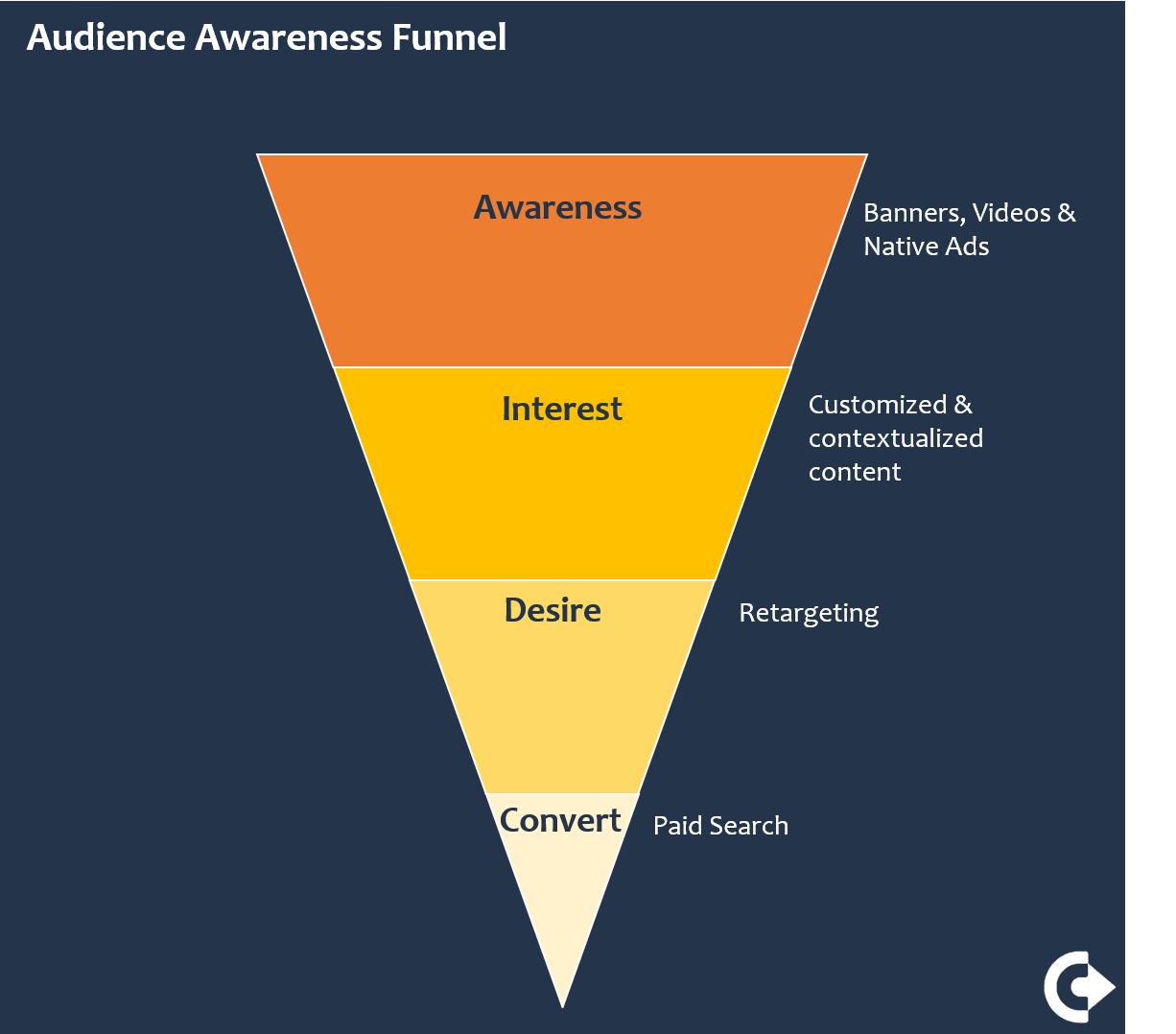
    When the market is slow and sales are tough to come by, a more strategic look at your advertising plan can come to your rescue. Digital Ad solutions can reach consumers at all stages of their awareness and consideration cycle:

    a. Banner Ads, video and native ads build awareness

    b. Custom content communicates a story to your audience

    c. Retargeting keeps your brand on top of their mind

    d. Paid search enables you to reach those who are eagerly looking for solutions


    During a market slow-down, concentrate your ad spend on those tactics and placements that will drive maximum results and give you the best bang for your buck. For instance, if you think advertising to cold traffic usually lowers your ROI, focus your Ad spend more on Retargeting or Paid search, so as to show your ads to mostly those who are still looking to buy.

    3. Your customers first
    The 80-20 rule applies to most businesses. It means 80% of your business comes from 20% of your customers. These 20% customers can become your business’s lifeline during this time. Ask your customers what they need from you. It is crucial that you communicate with them to retain their business. And by ‘communicate’ we mean using multiple platforms to get your message out. Just dropping an email may not be enough. A lot of businesses are reaching out to their customers and offering alternative solutions or innovative ways to keep them engaged.

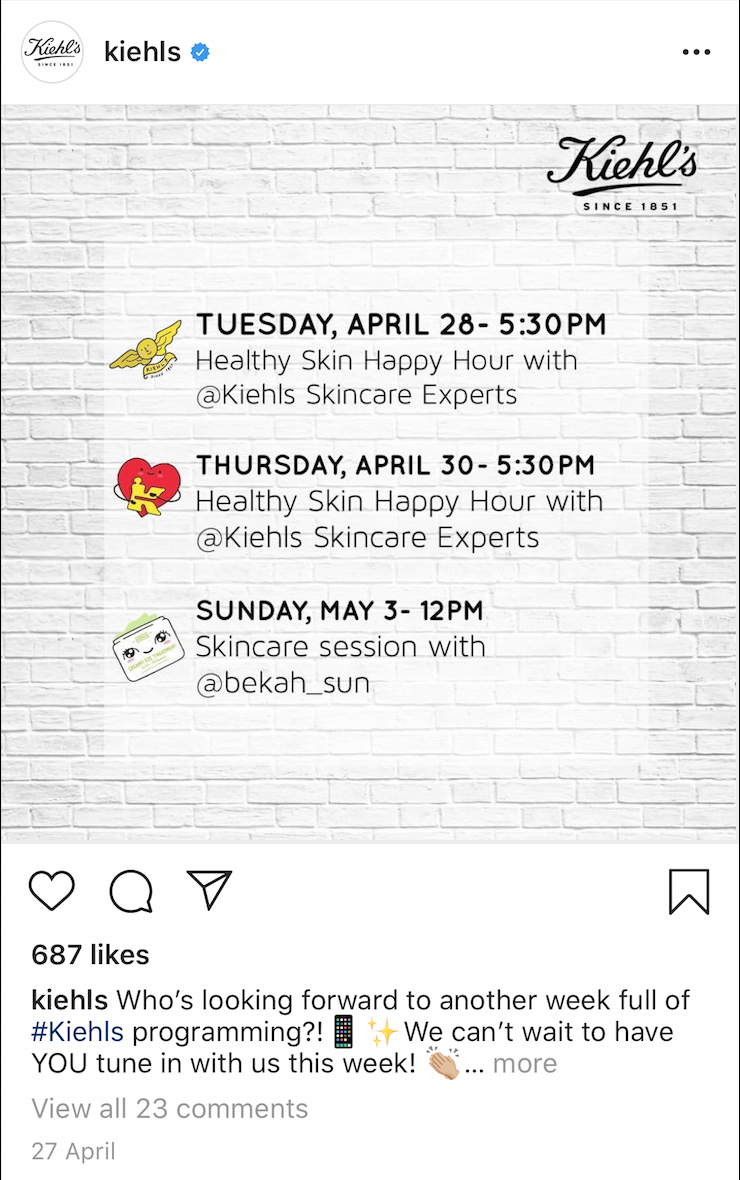
    Kiehl’s immediately began communicating ‘home-delivery’ solutions to its customers through Emails, SMS and their social media profiles since all their stores had to be shut due to the Covid-19 lockdown. They also started weekly Insta Live sessions with their Skin care experts to help their customers with DIY (do it yourself) tips and in turn stay on top of their mind.


    4. Be sensitive and Innovative
    The campaigns you ran before the pandemic started may not work now. Think about whether your messaging needs to change to be sensitive to the overall mood of your consumers. Everyone is living through unprecedented times with lockdowns, lay-offs and no clarity on how the situation will unfold. 

    This is also the time to consider your core values as an organization. Be innovative if there is an opportunity. Can you pivot your product or service to help your customers? Can you address or solve their pain points? People will always remember who helped them at these times. At the same time, they will remember who tried to profit by preying on insecurity. 

    5. Double your content marketing efforts
    While you may not advertise on all paid media platforms at this time, it could be a great time to focus on Content marketing and SEO. Both Content marketing and SEO are long term efforts, so step into the game now to reap the benefits as and when things start getting back to normal.

    A well devised content marketing strategy should focus on the core value you provide to your customers, and offer timeless solutions to their problems. Think how you could help your customers during and after the economic downturn. What solutions could they be actively searching for? Creating long-form blog posts, e-books, ultimate guides and templates helps build authority in your industry and positions you as an expert.

    While creating content ask yourself:

    a. What keywords do you want to rank for 8-12 months from now?

    b. Is there a product or service niche that you want to be known for?

    c. How can you repurpose your existing content to make it SEO friendly?

    d. What are your core competencies?

    e. How and what can you offer that’s different from your competitors?

    In Conclusion
    While it isn’t clear how long this pandemic-induced recession will last, one thing brands can’t afford is to ‘go dark’ and lose their market share in short or long term. Whether you are a big, well-known brand or a small one, you need to find ways to reach out to your customers, maintain or even increase your marketing spends during this period. A recession should be no reason to stop your advertising or marketing efforts. Like many successful organizations today have, turn towards the astute, money-wise strategies the digital marketing world has to offer. Outside that door you are certain to find opportunities to reach out, maintain connect, and sell to your target consumer.